News

  1. Home
  2. / News
https://files.gntfile.com/data-uploads/479/2025/12/c61a7f17de856d28382085e88f0f91b2.mp4
Why 48V Architecture? (Key Benefits) The 48V architecture’s core principle is to’ increase voltage while maintaining power output to reduce current’, delivering a series of key advantages: 1.High efficiency, low loss: According to the DC power formula P = V × I, when the power remains constant, the voltage increases fourfold (from 12V to 48V), while the current decreases to one-fourth of its original value. According to Joule’s law, the heat loss in a wire (P_loss = I² × R) is proportional to the square of the current. When the current is reduced to one-fourth, the line loss decreases to one-sixteenth of the original, significantly improving energy efficiency. Lightweight and low-cost: Smaller currents mean thinner wires (with smaller cross-sectional areas) can be used. This directly reduces the weight of the system’s cables and material costs, which is crucial for weight-sensitive fields such as automotive and robotics. 3.High power density: For robotic devices, smaller motors and thinner cables enable more compact and lightweight joint designs, enhancing both flexibility and integration. Security and Inheritance: 48V serves as the maximum safe voltage in typical applications, eliminating the need for stringent electrical safety measures and thus reducing system complexity and costs. It is a natural evolution of existing low-voltage systems (12V/24V), maintaining technical continuity (with lead-acid batteries rated in multiples of 6V). Review of the Development History of 48V Architecture Development line: from meeting basic needs to pursuing extreme efficiency, application field from fixed facilities to mobile platform. Early standards (early 20th century): 48V DC became the standard voltage for fixed telephone central offices, laying the foundation for modern telecommunication networks. The evolution of the automotive industry: 6V era: Three 2V lead-acid batteries connected in series, which was the early standard. 12V Era: With the proliferation of in-vehicle electrical systems and rising power demands, the configuration evolved to six batteries connected in series (6V×2). 24V Era: Commercial vehicles, due to their high power demands, adopt a 12-cell series battery configuration (12V×2) to reduce current and improve efficiency. Data Center Revolution (circa 2016): Spearheaded by Google and the Open Compute Project (OCP), this initiative addressed the massive power consumption of servers by implementing 48V power distribution, which significantly reduced energy waste and operational costs. Automotive Breakthrough (2023-2024): Tesla’s Cybertruck became the first production vehicle to fully adopt a 48V powertrain, replacing the decades-long 12V system and demonstrating its immense potential in mobile platforms. Robotics adoption (since 2020): Industrial, logistics, and service robots have adopted the 48V architecture to achieve higher efficiency, lighter weight, and more compact designs. The inaugural year of humanoid robotics (2024): Leading manufacturers including Tesla’s Optimus and XPeng’s IRON have all adopted the 48V battery architecture, establishing it as the new benchmark for advanced mobile robotics platforms.   The 48V architecture serves as the foundational cornerstone for robots to achieve “compact size, extended battery life, and intelligent interaction”. Why GaN is the Preferred Motor Drive Solution? (Key Advantages) GaN (gallium nitride) chips, with their core advantages of low loss and high power density, have overcome the limitations of traditional silicon-based devices, emerging as the key development direction for medium and low-voltage motor drives. The core advantages of GaN chips include: Low switching loss: Zero reverse recovery characteristic, no tail current, low switching loss of capacitor, optimized voltage-current overlap loss, significantly reduce the total loss of the system. High-frequency adaptability: It supports higher PWM frequency (far exceeding the 6-16kHz range of silicon-based devices). The frequency increase results in minimal power loss increment, effectively reducing motor current ripple and torque ripple while enhancing control precision. High power density: It enables smaller passive components (inductors and capacitors) to achieve higher output current under the same conditions, supporting greater loads. Tough environment and fast response: It features low temperature rise, superior thermal resistance, rapid dynamic response, and adaptability to complex operating conditions.   Comparison of Core Parameters of GaN and Si-based (IGBT/MOSFET) Motor Drivers contrast ratio GaN-based motor drive Si-based motor drive (IGBT/MOSFET) I. Basic Characteristics of the Materials energy gap 3.4eV (wide bandgap, high temperature and high pressure resistant) 1.12eV (narrow band gap, low tolerance limit) heat conductivity Approximately three times that of silicon (high thermal conductivity) Reference value (approximately 150W/(m·K), with weak conductivity) electron saturation velocity 2.8×10⁷ cm/s (high-frequency switching supported) Approximately 1×10^7 cm/s (high-frequency performance limited) II. Switch Performance maximum switching frequency Supports MHz level (typically 100kHz+; some scenarios reach MHz) Rated at 20kHz, but typically operates between 6-16kHz (high-frequency operation causes significant power loss) reverse recovery charge Zero (no reverse recovery loss, supports high di/dt/dv/dt switching) IGBT requires parallel diodes, which still incur reverse recovery loss; MOSFET’s body diode has a high Qrr. dead time Minimum 14ns (reduces torque harmonics and vibration) 100-500ns (may cause current discontinuity, leading to sixth-order torque harmonic) III. Loss Characteristics Switching loss reduction (compared to silicon) Discrete regimen reduced 39%(11.6w vs 19w), combined regimen reduced 24.5%(12.3w vs 16.3w) Baseline value (high frequency causes high loss ratio, limiting efficiency) frequency enhancement loss increment The power increase is only 0.7W when the frequency is increased from 20kHz to 40kHz, with the loss increment reduced by 83%. The power output increases by 4.1W when the output power is increased from 20kWz to 40kWz (with loss significantly increasing as frequency rises). On-resistance (RDS(on)) Based on two-dimensional electron gas (2DEG), it is far lower than silicon devices under the same specifications. The on-resistance (RDS) of MOSFET increases with current and temperature, while IGBT maintains a constant saturation voltage but exhibits tail current loss. IV. Thermal Properties device thermal resistance (Rth (i-s)) As low as 0.5K/W (flip-chip/CCP, short thermal path) 1.5-2K/W (traditional package with low heat dissipation efficiency) Differences in junction temperature with the same power consumption Low body temperature (20-40℃) (rapid heat conduction, minimal heat accumulation) The temperature is too high and may trigger overheating protection Demand for heat sinks No heat sink required for devices below 200W; the 1kW sealed package solution eliminates the need for a heat sink when current is below 18A. Medium and low-power systems still require heat sinks, while high-power large-scale cold air/liquid cooling modules V. System Design Features Volume of passive components Replacing 330μF electrolytic capacitor with 22μF ceramic capacitor reduces inductor size (lowering capacitive-inductive requirements at high frequencies). Rely on large volume electrolytic capacitors and inductors (requiring current ripple simulation at low frequency) Power density (output current) The discrete solution delivers 3.5A higher effective current value ratio (Si) while supporting greater load capacity at identical temperature rise. Reference value (current boost limited by power loss and heat dissipation) electromagnetic interference High integration (e.g., half-bridge sealed), allowing internal motor embedding to reduce cable length and minimize EMI. Discrete layout, long cable length, strong EMI radiation at high frequency VI. RELIABILITY temperature tolerance The temperature tolerance is far superior to that of Si-based devices (stabilizing operation under high load) Low temperature tolerance, life shortened at high temperature device lifetime (Arrhenius model) Life doubles for every 10℃ drop in junction temperature (lower junction temperature prolongs lifespan) High body temperature and relatively short lifespan Mean Time Between Failures (MTBF) Higher (low loss + low thermal stress, reducing failure risk) Lower (higher thermal stress and failure probability due to wear)     Typical manufacturers and solutions of GaN TI DRV7308 Integrated GaN FET pre-driver with three-phase modulation and field-oriented control capability. 12mm× 12mm QFN package, with over 99% efficiency in 250W motor drive applications, eliminating the need for a heat sink. Innosense Low-Voltage Solution (48V-60V Input, Compatible with 1kW Class Motors) Discrete scheme (INNDMD48V25A1): 6 INN100EA035A+3 INS2003FQ, the total loss is 11.6W (Si scheme 19W) at 40kHz/20A, and the temperature rise is only 10℃ when the frequency is increased to 40kHz. Encapsulation scheme (INNDMD48V22A1): 3 ISG3204LA half bridge GaN encapsulation, total loss 12.3W (Si scheme 16.3W) at 40kHz/20A, no radiator is needed below 18A. Companies including Texas Instruments (TI), Infineon, Innosense, EPC, and Nanoware are actively developing applications of gallium nitride (GaN) in humanoid robots, particularly for motor drive systems.  

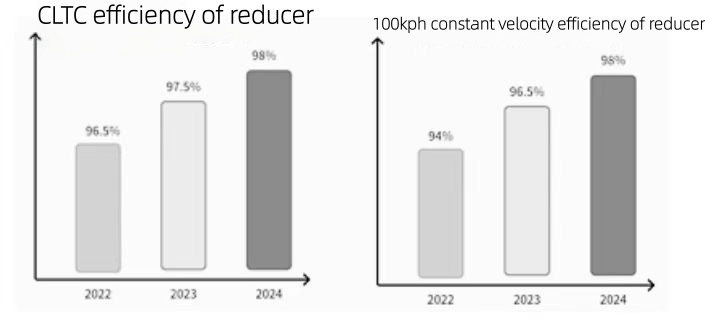
Development Status and Challenges of Transmission Assembly As a power transmission system in electric drive, the reducer can reduce speed and increase torque to meet the normal power demand of users. It mainly includes gear system, bearing, differential, housing and other accessories. The key attributes and performance requirements are space size, weight, efficiency and NVH.   Current electric drive reducers predominantly feature a single-speed, two-stage parallel shaft design, which offers a simple structure and high cost-effectiveness, making it the undisputed mainstream solution. However, as users increasingly demand more space and range in vehicles, the pressure on various subsystems grows significantly. As a critical component, electric drive reducers now face substantial challenges in space, weight, and efficiency. Leading OEMs and international powertrain giants are actively exploring innovative architectures, such as planetary gear arrangements.   Currently, planetary gear mass-production models are predominantly found in mid-to-high-end vehicles from international brands like Audi e-tron, Jaguar Land Rover I-Pace, and Lucid Air. In China, only the Jike brand and select Geely models will adopt this technology starting in 2024. Meanwhile, the passenger car planetary gear supply chain market is almost entirely dominated by global giants such as Schaeffler and ZF. Domestic manufacturers like Xingqu are actively expanding their presence in this field. Moving forward, coaxial planetary gears are expected to gain significant market traction, particularly in mid-to-high-end vehicle segments.   The requirement for high compactness in transmission systems   ▶ present situation   As a key powertrain component, the electric drive greatly affects the vehicle layout. With the increasing demand of the public for the interior space and luggage compartment space, and the platformization of the vehicle and powertrain, the powertrain is required to have a high adaptability to the vehicle layout.   Therefore, the space and regularity of the electric drive are required to be higher. As shown in the figure below, the size of the transmission system directly affects the X direction (longitudinal direction of the vehicle) of the electric drive, and then affects the space in the car or the space in the luggage compartment.   Figure 1 Schematic diagram of transmission system layout Source: Public information   The current transmission system predominantly employs parallel shaft configurations, where the X-axis dimensions are directly influenced by the distance between the input and output shafts. Industry standards for X-axis dimensions are generally as outlined in the table below. Although planetary gearboxes currently hold a small market share, their demand is projected to grow significantly in the future. Schaeffler, a leading advocate of planetary gearboxes, has developed models with X-axis dimensions 30% to 40% smaller than traditional parallel shaft systems. Table 1 X dimensions in the industry torque output <3000Nm 3000-4000Nm 4000-5000Nm X-axis dimension <400mm 400-600mm 460-480mm   ▶ throw down the gauntlet   The current transmission system compresses the space to the extreme. After reducing the center distance, it faces risks of shaft-to-tooth strength and NVH (Noise, Vibration, and Harshness).   The reduced center distance imposes constraints on macroscopic parameters of the gear teeth, including module limitations, root bending risks, and tooth surface contact strength challenges. Furthermore, the heightened torque response and frequent regenerative braking demands in new energy vehicles impose stricter strength requirements on gear teeth and differentials. Optimization is required in material selection, heat treatment processes, and surface strengthening techniques.   The need for lightweight transmission systems   ▶ present situation   For new energy vehicles, particularly pure electric models, range is a key concern for users, while weight significantly impacts driving range. The electric drive accounts for approximately 5% of the total vehicle weight, with the transmission system making up about 50% of the electric drive’s weight. Since the transmission system’s weight directly affects both cost and dimensions, low weight is also a critical requirement for the electric drive.   Currently, parallel shaft reducers dominate the market with over 95% adoption, where weight correlates with output torque as shown in the table below. The Zhi Ji L7/L6 series features magnesium-aluminum alloy housings, achieving 30% lighter weight than conventional aluminum alloy housings. Although planetary gearboxes currently hold a small market share, their demand is projected to grow significantly. As a pioneer in planetary gear reducer technology, Schaeffler’s solutions reduce weight by 30% to 40% compared to traditional parallel shaft reducers. Table 2 Relationship between weight and output torque of single reducer torque output <3000Nm 3000-4000Nm 4000-5000Nm Weight (dry weight) <25kg 25-30kg 30-35kg   ▶ throw down the gauntlet   To meet the demand for lightweight transmission systems, reducers are typically optimized through structural design and material selection. Structural optimization directly reduces material usage, but this approach also introduces risks of strength and reliability, as well as NVH (Noise, Vibration, and Harshness) issues. While magnesium-aluminum alloy housings are cost-effective, they suffer from high-temperature creep and poor stiffness, which further exacerbates NVH risks.   The need for efficient transmission   ▶ present situation   Another critical factor affecting vehicle range is electric drive efficiency. Beyond CLTC (China’s New Energy Vehicle Testing and Certification) standards, high-speed constant-speed efficiency has become a key concern for users. Common high-speed driving conditions like 100 km/h and 120 km/h require high-efficiency high-speed transmission systems with low torque output. Key considerations include transmission architecture, shaft layout, bearing selection, gear precision, housing cavity design, and lubricant choice.   With OEMs adopting assembly applications, refined operational conditions, and advancements in component technologies, the CLTC efficiency of gearboxes has been steadily improving. Before 2020, the CLTC efficiency was generally around 97%, with some manufacturers achieving 97.5%. For instance, XPeng Motors’ G9 (2022 model) demonstrated a measured CLTC efficiency exceeding 97.5%, while the G6 (2023 model) reached 97.6%.   ▶ throw down the gauntlet   At present, the high efficiency reducer is basically through reducing the torque loss and reducing the speed loss.   Reduce torque loss by improving gear meshing precision, reducing tooth surface roughness and slip rate, and using low rolling resistance ball bearings.   Reducing speed loss: The dry oil pan minimizes oil agitation loss, and low-viscosity lubricants are recommended.   The high meshing precision and low tooth surface roughness will put forward higher requirements for the shaft gear machining technology and production rhythm, and also mean higher production cost. The protection ability of the shaft gear bearing will be reduced when low viscosity lubricating oil is selected, which brings higher challenge to the reliability of the shaft gear bearing.   The need for low-noise transmission   ▶ present situation   As consumers increasingly prioritize vehicle quietness, the lack of engine noise masking in electric drive systems makes their noise more noticeable. Moreover, the noise from electric drive gearboxes typically falls within the mid-to-high frequency range that users can easily perceive. With recent advancements in domestic vehicle manufacturing processes and material quality, the overall sound quality of vehicles has significantly improved, which has further accentuated the whistling noise from electric drive systems.   In modern drivetrain systems, NVH issues have expanded beyond shaft-to-tooth squealing. Customers now prioritize ride comfort and acoustic quality, while also noticing clunking noises and jerky transitions during torque shifts. This reflects the growing complexity of NVH challenges in automotive engineering.   In standard transmission systems, the semi-damp chamber typically produces an average noise level of 5 decibels (dB) at 1 meter distance and around 70dB(A) under full torque conditions, with some manufacturers achieving noise levels below 65dB(A).   ▶ throw down the gauntlet   Compared to conventional vehicles, new energy vehicles face greater NVH (Noise, Vibration, and Harshness) development challenges due to the absence of the masking effect from internal combustion engines and users’ growing demand for cabin quietness. The transmission system noise in these vehicles predominantly involves mid-to-high frequency sounds that are particularly sensitive to human ears. With numerous rotating components and significant challenges in mass production and assembly stability, transmission noise has become a major source of customer complaints.   NVH (Noise, Vibration, and Harshness) is a subjective perception closely tied to cost considerations. As user expectations vary across different vehicle segments, establishing NVH development objectives must first align with the vehicle’s positioning and target user demographics. The resolution of NVH issues spans the entire vehicle development lifecycle. Once identified, the process involves testing, analysis, computational simulations, problem categorization, solution formulation, and validation. Beyond a robust development process, hands-on experience plays a pivotal role in addressing these challenges.   To address transmission system squealing, structural excitation is the root cause, while path control is equally critical. NVH improvement strategies targeting both source and path often conflict with lightweighting requirements while driving up costs. Beyond the inherent complexity and evolving demands of NVH challenges, achieving multidimensional balance between NVH mitigation measures, lightweighting, and cost control poses a significant decision-making challenge for OEMs and suppliers at all levels.   The Development Status and Challenge of Gear   1.The high-speed rotation requirement of gears   ▶ present situation   High-speed gears have been widely adopted in new energy vehicles, primarily for their ability to transmit power stably at high speeds. Their application involves multiple aspects including material selection, design, manufacturing, and lubrication. The gear speed in new energy vehicles has evolved from 12,000 rpm to over 20,000 rpm, and is now trending toward 30,000 rpm and beyond.   The development of high-speed gears has raised higher requirements for gear design, material selection, and manufacturing, especially in terms of controlling gear lifespan, lubrication, heat dissipation, and NVH (Noise, Vibration, and Harshness).   ▶ throw down the gauntlet   Reliability: High-speed operation accelerates tooth surface contact fatigue, fretting fatigue, and stress concentration, leading to premature gear failure. Currently, materials such as 20MnCr5 are selected for gears, which offer higher strength, better toughness, and superior heat treatment and processability.   Lubrication & Heat Dissipation: At high rotational speeds, gears experience higher linear velocities, resulting in increased heat generation during meshing and hindering oil film formation, thereby elevating the risk of gear failure. This also poses greater challenges in gear design, requiring stricter specifications for anti-caking properties, slip rates, and linear velocities. A well-designed tooth profile is particularly critical, while the selection of lubricants and proactive lubrication of gears are equally vital.   Dynamic balancing: As the rotational speed increases, the impact of dynamic balancing factors on the NVH of electric drives gradually intensifies, and the dynamic balancing requirements for shaft-to-tooth components become more stringent. Currently, all shaft-to-tooth components now include dynamic balancing inspection requirements.   Gear NVH: The expanded torque, speed, and rotational frequency ranges at high gear speeds significantly increase NVH control complexity. This raises challenges in managing gear excitation and vehicle transmission paths, requiring coordinated design of both electric drive sound packages and vehicle sound packages, along with vibration and noise isolation for structural pathways. At higher speeds, the torque and speed ranges broaden considerably, while the corresponding rotational frequency range nearly doubles, substantially complicating NVH control. As a result, acoustic packages have become a standard feature in electric drive systems.   Gear manufacturing: The precision requirements for gears are becoming increasingly stringent. Currently, the industry is transitioning from the national standard grades 5-6 to grades 5 and above, making the manufacturing process more challenging.   The requirement for high gear ratios   ▶ present situation   With the development of motor performance, the peak speed of motor is gradually increased, the limit of the maximum speed is gradually improved, and the limit of the gear ratio is gradually released.   Considering the vehicle acceleration and electric drive economy, increasing the speed ratio can quickly improve the wheel-end torque of the vehicle, and reduce the volume of the motor to achieve the economic index.   As the peak speed of the motor approaches 20,000+, the gear ratio is also showing a gradual increasing trend. For example, Huichuan has mass production projects with a gear ratio> 12, and Huawei has mass production projects with a gear ratio> 13. Designs with gear ratios above 13 are gradually becoming the norm.   ▶ throw down the gauntlet   The application of high-speed ratio gears has increased the difficulty in both gear performance and manufacturing.   NVH performance: High-speed ratio gears typically generate more noise and vibration, and their design, material selection, and manufacturing pose greater technical challenges.   In terms of reliability, high speed ratio gear needs to bear larger torque and speed, and the linear speed of gear meshing is also larger, which puts forward more strict requirements on the reliability index of bending and contact.   Material: With the increase of the speed and torque, the performance of the gear material is also required to be higher, which needs to consider the strength and wear resistance.   In the manufacturing, the high speed ratio gear is more sensitive to the gear meshing excitation, which makes the gear require higher precision and consistency.   High NVH requirements for gears   ▶ present situation   Unlike internal combustion engines, new energy vehicles are more sensitive to gear NVH performance, requiring higher NVH standards for gear systems, particularly in terms of transmission smoothness and noise reduction.   Gears are a key power source in electric drive systems. Given their lengthy manufacturing processes and high control complexity, NVH (Noise, Vibration, and Harshness) issues in gears pose a significant challenge for the industry. Industry statistics indicate that 70-80% of aftermarket NVH problems stem from bearings and gears, with gear-related issues accounting for 50-60%. Gear NVH is a major contributor to overall vehicle NVH performance. As high-speed and high-ratio gears become increasingly prevalent, addressing NVH challenges in gears has emerged as the industry’s top priority.   ▶ throw down the gauntlet   Gear NVH involves multiple aspects such as gears, electric drive, chassis, and the whole vehicle. It is a systematic control index with a wide range and great difficulty in control. At the beginning of the design, risks should be identified and controlled in advance from the dimensions of gear design & manufacturing and path.   In gear design, NVH of shaft gear involves many fields, such as gear design, machining, assembly, shell support stiffness, bearing stiffness, shaft gear mode, shell mode, electric drive mode, motor mode, transmission path, acoustic radiation, etc. Figure 2: Axis-tooth squeal control points Source: Compiled from public data   In gear manufacturing, precision requirements are escalating. While the industry currently adheres to national standard grades 5-6, rising NVH (Noise, Vibration, and Harshness) demands now require specific gear precision metrics to exceed grade 4, posing significant challenges for both accuracy and consistency assurance. Given the lengthy processing cycle and multiple critical stages, stringent controls are essential across all phases—from material selection and blank production to heat treatment, finishing, and gear grinding. Each process requires precise parameter optimization, further complicating manufacturing. Comprehensive monitoring is imperative for NVH-critical parameters including tooth profile orientation, cumulative runout, surface roughness, Fourier analysis, tooth surface waviness, three-dimensional profile, dynamic balance, and grinding patterns.   The Development Status and Challenges of Bearing   High-speed requirements for bearings   ▶ present situation   In 2024, the industry’s bearing requirements generally specify rotational speeds between 16,000 and 23,000 rpm, with some OEMs developing ultra-high-speed motors during pre-research stages that require 30,000 rpm. From the perspective of bearing usage across OEMs,imported brands dominate high-speed bearing applications, while domestic brands are rapidly catching up in both technological development and installation verification.   ▶ throw down the gauntlet   Ultra-high-speed bearings with low friction and temperature rise, using special heat-treated steel balls or low-cost ceramic balls.   High-speed lightweight cage design to suppress the “umbrella effect” in pocket holes, along with the R&D and design simulation of specialized cage materials.   High-speed bearings require higher internal precision, such as roundness, ripple, roughness, profile, runout, etc.     time line 2015-2017 2018-2019 2020-2024 2025 2030 bearing dmN 800,000 1 million 1.5 million 180,000 2 million Example of bearing rotational speed( unit rpm) 6208→13000 6208→16000 6208→25000 6208→30000 6208→33000 Table 3 Timeline for High-Speed Mass Production of Electrically Driven Bearings (dmN: a rotational speed parameter measured in mm·r/min)   The need for high efficiency in bearings   ▶ present situation   Current electric drive systems predominantly utilize low-friction bearings. For instance, the XPeng XPower 800V electric drive platform employs industry-leading low-friction bearing designs throughout. To balance gearbox design redundancy and cost considerations, most intermediate and output shaft support bearings adopt tapered roller bearing combinations. For optimal operational efficiency, lower-friction deep groove ball bearings (DGBB) paired with cylindrical roller bearings (CRB), or dual-row ball bearings (TBB), would be more suitable.   ▶ throw down the gauntlet   Cone roller bearings deliver lower friction loss through optimized flange convexity design, ultra-precision manufacturing, and nylon cage.   The bearing features miniaturization and custom design, utilizing high-purity steel with specialized heat treatment and coating reinforcement technologies.   Select the optimal bearing efficiency combination based on actual operating conditions, such as DGBB+CRB, TRB, or TBB.   Development demand of insulating bearing   ▶ present situation   With the industry’s widespread adoption of 800V high-voltage platforms for electric drives, power modules in inverters have transitioned from IGBT to SiC, resulting in faster switching speeds. The high dv/dt (voltage-to-current rate) has dramatically increased the risk of electrical corrosion in bearings, demanding enhanced insulation protection. While hybrid ceramic ball bearings currently offer the most ideal insulation, their exorbitant manufacturing costs remain a major industry pain point. Meanwhile, low-cost insulated bushing bearings are being actively developed, with leading manufacturers including SKF, Ensk, Fuji Electric, and Renben.   ▶ throw down the gauntlet   Development of low-cost ceramic ball bearings and localization of ceramic powder supply chain. The insulation bushing bearing is developed with the target insulation impedance of 800Ω@1~5MHz.   time line 2018-2020 2021-2023 2024 2025 and beyond voltage platform 800,000 1 million 1.5 million 180,000 motor bearings ball bearing hybrid ceramic ball bearing The insulation layer has an impedance of 400Ω (1-5MHz). The insulation layer has an impedance of 800Ω (1-5MHz).   Table 4 Voltage Platform and Bearing Selection Trend   Trends and Planning of Transmission System Assembly   The electric drive system is developing towards the multi-objective direction of compact size, low weight, high efficiency and low noise, which provides more space, higher endurance and more comfortable riding environment for the vehicle.   ▶ Development Direction: Coaxial planetary gear technology aligns with the development objectives of electric drive systems and is emerging as the mainstream trend for future electric drive systems, particularly in high-torque electric drive products. To deliver high-performance experiences for users, planetary gears will gradually dominate the market. Both domestic OEMs and Tier1 manufacturers are actively investing in and developing this technology. Core components and processes of planetary gears, such as gear rings, planetary gear mechanisms, planetary carrier stamping, and welding, show significant growth potential.   To meet users’ demands for optimal handling and versatile power output across various scenarios, distributed electric drive systems (including central integrated distributed drive, wheel-side drive, and hub motors) along with multi-speed transmission systems are being deployed in specialized applications, significantly enhancing the user experience across diverse operating conditions and environments. Meanwhile, most small-torque electric drive systems continue to utilize parallel shaft transmission configurations, ensuring optimal cost-performance ratios for end-users.   ▶ Supply Chain and Cooperation Model: With the country’s emphasis on the new energy vehicle industry, compared to the traditional transmission industry, the initial technical threshold and industrialization investment threshold for electric drive systems are both lower, further promoting the continuous development of China’s new energy electric drive system industry. From the initial dominance of the supply chain, it has gradually evolved into a dual-track approach of supply chain plus OEM self-developed and self-manufactured systems. As market competition intensifies and the integration level of electric drive systems continues to improve, the future supply chain will be more closely integrated with OEMs,with clear division of labor, to ensure long-term market stability.   Trends and objectives for high-efficiency transmission systems   With the continuous improvement of efficiency targets, technologies such as ultra-high-precision shaft teeth, low rolling resistance bearings, low oil agitation loss shaft arrangements, active lubricant dry oil pan systems, and ultra-low viscosity lubricants will be progressively adopted. Coupled with the widespread use of coaxial planetary gear reducers, the CLTC efficiency target for transmission systems is expected to exceed 98% by 2024.   Future efficiency gains will transcend isolated upgrades to components or sub-assemblies, focusing instead on system-level optimization and integrated multi-strategy applications. Efficiency metrics will become more granular, with automakers now prioritizing real-world performance metrics like 100km/h and 120km/h steady-state range—beyond the conventional CLTC (China Light-Duty Test Cycle) benchmark—to better align with users’ daily driving needs.       Figure 3 Efficiency levels of electric drive industry reducers in the past three years The trend and objectives of lightweight design   From 2027 to 2030, planetary gear sets are expected to be widely adopted in high-power, high-torque electric drive systems, reducing weight by 30% to 40% compared to current standards. With advancements in new materials (e.g., magnesium-aluminum alloy housings) and manufacturing processes (such as welding differential bolts instead of screws, and stamping die-cast differential housings), the drive system weight is projected to decrease by an additional 5%.     time 2027-2030 torque output <3000Nm 3000-4000Nm 4000-5000Nm Weight (dry weight) <15kg 15-18kg 18-25kg   Table 5 Relationship between Transmission System Weight and Torque Output   Trend and goal of low-noise transmission system   To meet users’ increasingly stringent comfort requirements, the transmission system has progressively enhanced its excitation optimization and path simulation capabilities, with NVH targets varying across different vehicle classes.   Alongside advancements in simulation techniques, NVH research has shifted focus toward user-critical driving conditions. The initial development emphasis has transitioned from 100% torque NVH performance to real-world scenarios like light throttle and steady-state driving.   NVH issues are inherently systemic challenges. As user demands grow, solutions for electric drive NVH problems are evolving from isolated fixes to comprehensive system-level approaches, balancing cost-effectiveness. This includes strategies like noise masking for gear stage background noise, localized acoustic packaging, and frequency-specific optimization of acoustic materials. With continuous advancements in transmission reducer component manufacturing, noise levels in drive systems are progressively decreasing.   The noise standard of the transmission system is 1.5 m average noise, and the target trend prediction is shown in the table below.   Noise of Half-Load Bench at Full Torque Condition time 2024-2027 2027-2030 Low-end model 70dB(A) 68dB(A) Mid-to-high-end car models 65dB(A) 60dB(A) Table 6: Average Noise Trends   Trends and targets of spatial dimensions   In order to meet the demand of larger interior space and platform layout of powertrain, the powertrain is required to be compact and regular in shape, and the transmission is gradually developing from parallel shaft to planetary coaxial arrangement.   The planetary arrangement offers superior spatial dimensions, particularly in the X-axis direction compared to parallel-axis configurations. With equivalent output capacity, the X-axis configuration can reduce the space requirement by approximately 40%.   Axis Gear Trends and Goals   To meet the development of new energy vehicles, the performance requirements for gears are becoming increasingly stringent.   ▶ Lightweighting: With the development of new energy vehicles towards lightweight, gears and transmission systems are also optimized towards smaller volume and lighter mass; structural innovation, small center distance gears and planetary gear reducer configurations have become the industry development trend.   ▶ High-efficiency transmission: To improve the range and overall energy efficiency of new energy vehicles, high-efficiency gears and transmission systems are continuously optimized in terms of conversion efficiency, transmission ratio, and torque density. High-speed and high-ratio gears are becoming the trend.   ▶ High NVH performance requirements: Noise control is critical to the ride comfort of new energy vehicles. High NVH performance gears have become a key control indicator in the development of new energy vehicle gears. The design dimension is controlled in advance, involving multi-dimensional design control such as gear structure, machining, assembly, housing support stiffness, bearing stiffness, shaft-to-tooth modal, housing modal, electric drive modal, motor modal, order avoidance, transmission path, and acoustic radiation.   ▶ Materials and Manufacturing: High-performance materials including high-strength steels, advanced alloys, non-metallics, and composites are being progressively adopted. The precision requirements for gears are increasingly stringent, with national standards mandating Grade 5 or higher precision, and some parameters reaching Grade 4 or higher. A comprehensive control system integrates human, machine, material, method, and environmental factors in gear manufacturing. Strict coordination across all machining processes ensures full sequence precision. The implementation of new technologies such as honing, ultra-finishing grinding, and precision gear manufacturing enhances accuracy while maintaining consistency.   ▶ Because of the tooth tolerance, gear machining error, assembly error, etc., the gear has other order besides the characteristic order, so the control of gear precision is very important.
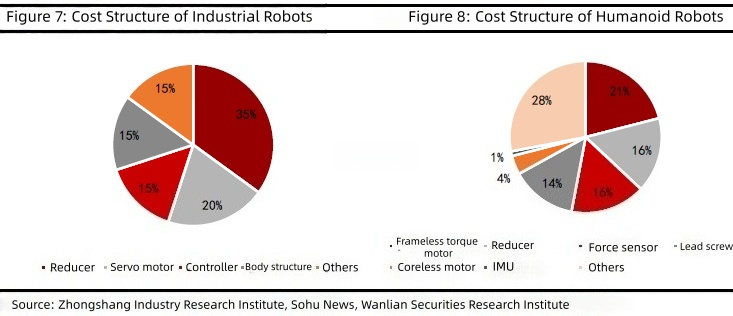
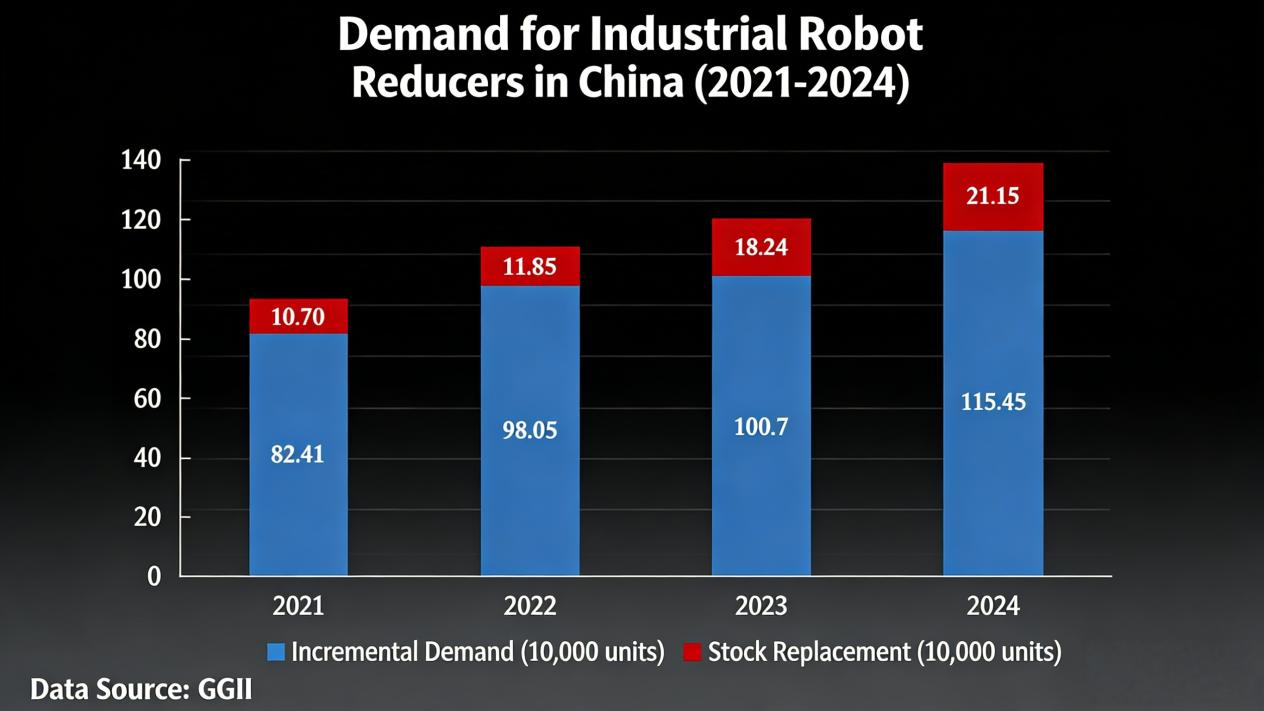
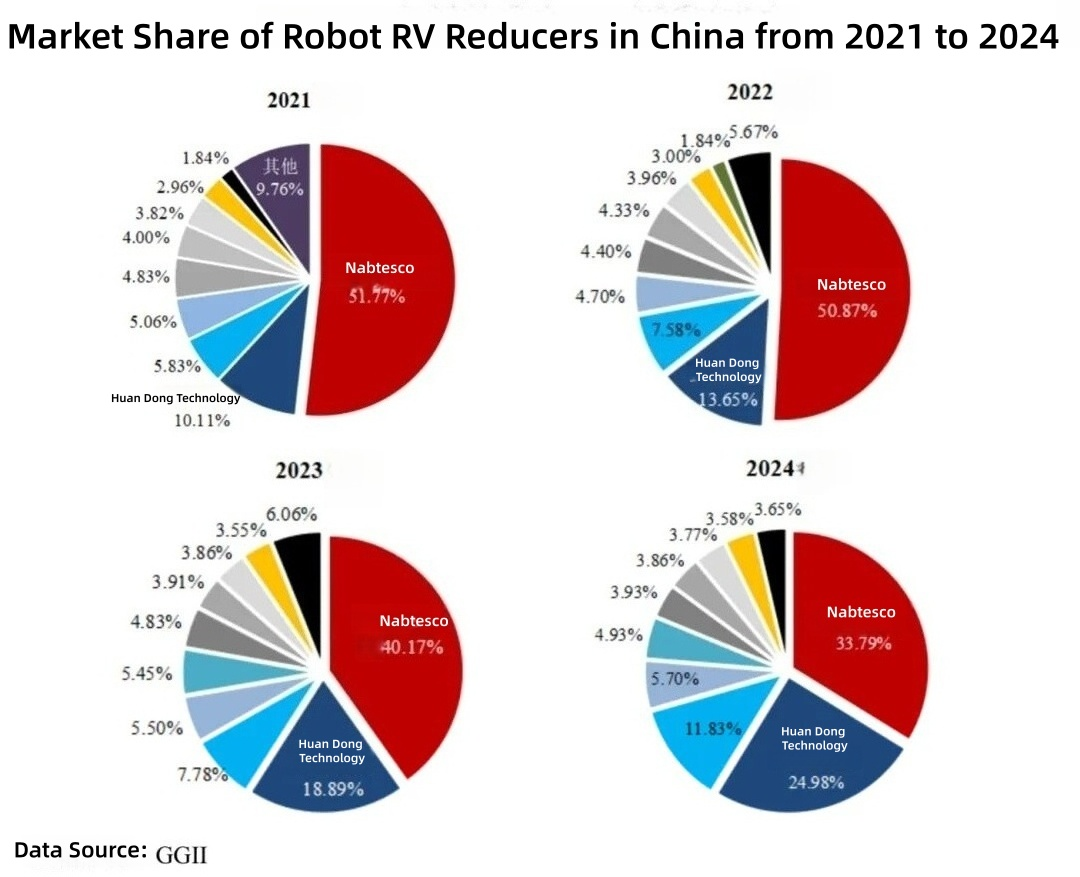
Technical Overview of Reducers 1.1 Working Principle and Main Classification of Reducer In mechanical transmission systems, a reducer functions as a critical intermediate device connecting the power source and actuator. Its core mechanism involves gear reduction and torque amplification through mechanical transmission. Specifically, the reducer employs a gear system where the input shaft (with fewer teeth) meshes with the output shaft’s larger gear, effectively decelerating the high-speed rotational force of the prime mover while increasing the output torque. As a result, reducers are extensively utilized in low-speed, high-torque transmission equipment and are considered a key factor influencing robotic performance. Reducers come in diverse types and models to meet the varying power transmission needs across industries. They can be classified in multiple ways. Based on control precision, reducers are categorized into general-purpose reducers and precision reducers. General-purpose reducers offer lower control precision but suffice for basic power transmission in general machinery. Precision reducers, on the other hand, feature high accuracy, extended service life, minimal backlash, and superior reliability, making them ideal for high-precision control applications in industrial robotics, collaborative robotics, industrial automation, and other advanced manufacturing fields. Precision reducers, primarily RV reducers and harmonic reducers, are core components in high-end equipment manufacturing such as robotics, accounting for approximately 35% of the total cost of an industrial robot. These reducers are widely used in high-precision control applications including industrial robots, collaborative robots, and industrial automation, where they face high technical barriers. Specifically, harmonic reducers are designed for lightweight, low-load applications, while RV reducers are optimized for medium-to-high load scenarios requiring high torque and rigidity. The latter demands more advanced technology, presents greater challenges in production and assembly, and has a lower domestic production rate. Currently, Japan’s Nabtesco maintains a leading position in this global market. Due to their distinct technical characteristics in transmission principles and structural designs, these two systems demonstrate complementary advantages in downstream products and application domains, serving diverse scenarios and end-use industries. A concrete comparison in industrial robotics is as follows: project RV decelerator harmonic reducer Transmission principle and deceleration structure The reducer is composed of the first stage involute planetary transmission and the second stage cycloidal planetary transmission. At least two eccentric shafts are used to connect the second stage reducer. The pinion and cycloidal gear are made of solid castings and steel parts. The system is composed of three core parts: the flexible wheel, the rigid wheel and the wave generator. It is simple and compact, and the material, volume and weight are lower than the RV reducer. performance characteristics Large volume, high load capacity (allowable torque load can reach 28,000 N·m), high stiffness; but at the same time, the product uses relatively complex over-positioning structure, manufacturing process and cost control is more difficult The volume is small and the load is low (the allowable torque load is up to 1,500 N·m), but the key gear is a flexible element, and its performance is gradually reduced under repeated deformation, and the bearing capacity and life of the product are limited. load bearing capacity and life The product can achieve higher product torque and anti-impact ability, torsional overturning stiffness, fatigue strength is greater, precision life is longer, high motion precision. The flexible gear transmission has low fatigue life and weak torsion resistance. synovial joint It is more suitable for large torque and heavy load joints such as robot base, waist and upper arm. It is generally used for light load positions such as forearm, wrist and hand. Actual usage RV reducers are primarily used for loads above 20kg, while RV harmonic reducers are recommended for loads between 6kg and 20kg. For loads under 6kg, harmonic reducers are typically used. Main terminal application areas The field of medium and heavy-duty robots, represented by industries such as automotive, photovoltaic, welding, bending, spraying, palletizing, metal processing, transportation, and port terminals. The 3C electronics, semiconductor, food, injection molding, mold, and medical industries are in high demand for light-duty robots.   1.2 Working Principle and Characteristics of RV Reducer As defined in GB/T 34897-2017 “Precision Bearings for RV Reducers in Rolling Bearing Industrial Robots”, an RV reducer is a transmission mechanism comprising a planetary gear reducer as the front stage and a cycloidal pinwheel reducer as the rear stage. It features a high transmission ratio and self-locking capability under specific conditions.   The RV reducer, developed from traditional pin-torsion planetary transmission, features a dual-stage reduction system comprising a planetary gear reducer as the front stage and a cycloidal pinwheel reducer as the rear stage, with at least two eccentric shafts connecting the two stages. Its housing and cycloidal pinwheel are solidly coupled through castings and steel components, forming a closed differential gear train. This innovation not only overcomes the limitations of conventional cycloidal pinwheel transmissions but also delivers a range of advantages including high precision (with tooth clearance below 1 arc minute), exceptional rigidity, superior durability, high output density (compact yet powerful), a broad speed reduction ratio, and minimal vibration. The motion transmission process of the RV reducer operates as follows: The servo motor’s rotation is transmitted to the planetary gears through the input gear. Based on the gear ratio between the input gear and the planetary gears, the speed is correspondingly reduced (first-stage reduction). The crankshaft is directly connected to the planetary gears, maintaining the same rotational speed. Two cycloidal gears are installed between the eccentric section of the crankshaft and the needle roller bearings. When the crankshaft rotates, the cycloidal gears mounted on the eccentric section also perform eccentric motion around the input shaft. On the other hand, the needle roller housing contains needle rollers evenly spaced at intervals, with one additional roller per cycloidal gear. As the crankshaft completes one full rotation, the cycloidal gears engage with the needle rollers while undergoing eccentric motion. During this process, the output planetary carrier rotates one tooth’s distance in the opposite direction to the crankshaft’s rotation. This rotation is then transmitted to the shaft of the second-stage reduction unit (second-stage reduction). The total reduction ratio is the product of the reduction ratios from both first and second stages. The situation of precision reducer industry in China 2.1 The successive introduction of national strategies and industrial policies has driven the rapid development of domestic precision reducers. In recent years, industrial policies have provided strong support for technological breakthroughs and accelerated development in industrial robots and precision reducers. The government has designated robotics and high-end CNC machine tools as one of the ten key priority areas requiring vigorous promotion, with specific requirements to achieve engineering breakthroughs and industrialization of intelligent core components like reducers. The 14th Five-Year Plan and its supporting plans outline strategies to deepen the manufacturing power strategy, optimize and upgrade the manufacturing sector, cultivate advanced manufacturing clusters, and drive innovation in industries such as robotics. The plan emphasizes the development of intelligent manufacturing equipment, addressing weaknesses in perception, control, decision-making, and execution through industry-academia-research collaboration. Key objectives include overcoming critical bottlenecks in foundational components and devices, as well as developing advanced controllers, high-precision servo drive systems, and high-performance, high-reliability reducers.   For instance, the “14th Five-Year Plan for Robot Industry Development” outlines that in the face of new circumstances and requirements, the next five years and beyond will be a strategic opportunity period for China’s robotics industry to achieve self-reliance, innovation, and leapfrog development. It emphasizes seizing opportunities, confronting challenges, and accelerating solutions to issues such as insufficient technological accumulation, weak industrial foundations, and lack of high-end supply, thereby propelling the robotics industry toward mid-to-high-end development. The plan advocates for high-end and intelligent development, targeting industrial transformation and consumption upgrades. Key priorities include breaking through core technologies, consolidating industrial foundations, enhancing effective supply, expanding market applications, improving supply chain stability and competitiveness, continuously refining the industrial ecosystem, and driving high-quality growth in the robotics sector. The development goals set forth in the plan are: By 2025, China aims to become a global hub for robotics innovation, a cluster for high-end manufacturing, and a new frontier for integrated applications. Breakthroughs will be achieved in core robotics technologies and premium products, with overall performance metrics reaching international advanced levels and key components matching the reliability of global counterparts. The robotics industry’s annual revenue growth rate will exceed 20%, fostering a group of internationally competitive leading enterprises and numerous innovative, high-growth specialized “little giant” enterprises. Three to five globally influential industrial clusters will be established. Manufacturing robot density will double. By 2035, China’s robotics industry will achieve world-leading comprehensive strength, with robots becoming integral components of economic development, people’s livelihoods, and social governance. The plan outlines key objectives: strengthening industrial foundations, enhancing the functionality, performance, and reliability of critical robot components, and developing advanced manufacturing technologies for high-performance reducers, including RV reducers and harmonic reducers. These efforts will improve precision retention (longer lifespan), reliability, and noise reduction, paving the way for mass production.   The successive rollout of national and industrial policies has provided strong support for the rapid development of domestic precision reducers.   2.2 Benefiting from the growing demand for industrial robots, the market for industrial robot reducers, including RV reducers, is expanding rapidly. According to GGII data, China’s total demand for industrial robot reducers increased from 931,100 units to 1,366,000 units between 2021 and 2024, with a compound annual growth rate (CAGR) of 13.63%. The incremental demand rose from 824,100 units to 1,154,500 units, achieving a CAGR of 11.89%. As digitalization accelerates, the automation of human labor will gain significant benefits. As a core component driving industrial automation, supporting industrial upgrading and smart manufacturing, reducers are poised for long-term growth. 图片4   2.3 The Rise of Domestic Brands in Industrial Robots and RV Reducers In recent years, driven by surging downstream demand, expanding application fields, and bolstered by industrial policies and collaborative efforts among government, industry, academia, research institutions, and end-users, China’s industrial robotics sector has prioritized breakthroughs in core technologies. Domestic manufacturers have consistently overcome technical hurdles in critical components like gearboxes, steadily enhancing their technological prowess and competitive edge. The performance gap between Chinese products and global leaders continues to narrow. In China’s industrial robot market, domestic brands are rapidly rising, and the import substitution process is accelerating. With breakthroughs in key technologies, improvements in the performance of domestic robots, and the optimization of the supply chain system, domestic industrial robot manufacturers have seized market opportunities to achieve rapid growth in recent years. Meanwhile, China’s industrial robot reducer industry, including RV reducers, has entered a phase of rapid growth. With domestic RV reducer manufacturers enhancing their technical capabilities and product performance, gradually expanding production capacity, and gaining increasingly prominent pricing and cost-performance advantages, leading domestic industrial robot manufacturers are rapidly increasing the localization rate of RV reducers in procurement. This trend is driven by considerations such as supply chain security and stability, procurement costs, and procurement cycles. The domestic industrial robot reducer market demonstrates significant growth potential and vast market space.   Industry technical level and characteristics The RV reducer industry is characterized by high technical difficulty, high investment threshold, and high industry barriers. It requires substantial capital and talent investment in R&D design, quality control, product testing, assembly, and trial verification. The manufacturing process imposes strict requirements on materials, production equipment, and process precision. This industry is a technology-intensive, capital-intensive, and talent-intensive sector. The key technical parameters of industrial robot RV reducers include torsional stiffness, starting torque, transmission accuracy, backlash, clearance, transmission error, transmission efficiency, and noise. The design, development, and manufacturing of RV reducers require repeated testing and adjustments of related materials, component structures, and gear profiles, a process demanding 5-6 years of technical expertise and experience. The precision requirements of RV reducers determine their high technical content in production. Major technical challenges include their two-stage reduction design, where even minor errors at the front end are amplified during output, affecting product accuracy. Additionally, to ensure transmission of high torque, withstand significant overload impacts, and maintain expected service life, RV reducers employ over-positioning structures in their design. This necessitates high-precision machining and presents substantial processing difficulties. Particularly during mass production, achieving stability, reliability, and consistency in product performance and quality becomes even more challenging. In recent years, supported by industrial policies and collaborative efforts among government, industry, academia, research institutions, and users, China’s robotics R&D has prioritized breakthroughs in core technologies. Through years of independent innovation and technology absorption, some domestic enterprises have successfully overcome technical challenges in key components like reducers, steadily enhancing their technological capabilities and core competitiveness. Their products now meet internationally advanced standards in technical specifications and performance. Particularly in industrial robotics, manufacturers like Huan Dong Technology, a leading RV reducer producer, have filled the supply-demand gap for core components in China’s industrial robotics sector through sustained independent R&D and investment.   The main barriers to entering the industry 4.1 Barriers to Advanced Manufacturing Technologies The RV reducer industry is a technology-intensive, R&D-driven sector where product development and innovation demand robust technical capabilities and dedicated R&D resources. The entire lifecycle of an RV reducer—from design and development to mass production—requires years of iterative testing, refinement, and the accumulation of technical expertise. Given the industry’s broad application scope, leading players have developed advanced R&D and process design capabilities, along with extensive technical knowledge and experience. They can precisely identify industry trends, stay ahead of technological advancements, and effectively address product iteration needs. New entrants, however, often struggle to meet market demands in areas like technical expertise and talent development, making it difficult for them to achieve significant breakthroughs quickly and putting them at a competitive disadvantage.   4.2 Customer Access Barriers For downstream industry clients, the performance and quality of RV reducers directly impact the quality and other characteristics of host products. When selecting RV reducer manufacturers, downstream clients maintain a rigorous supplier qualification system. Industry manufacturers must not only pass internationally recognized quality system certifications but also meet the evaluation criteria established by individual clients. The supplier selection process typically involves extended periods of stringent audits and product performance assessments. Clients generally test suppliers’ products on multiple performance metrics including precision, reduction ratios, load capacity, transmission efficiency, service life, and stability, with some clients conducting tests lasting tens of thousands of hours. For these clients, once a supplier enters their network, stable partnerships are typically established. Consequently, the RV reducer industry maintains certain customer entry barriers.   4.3 Barriers to Capital Investment and Large-Scale Production RV reducers demand high performance standards and advanced manufacturing processes, involving multiple production stages, diverse raw material requirements, and a significant need for high-performance materials. They also require comprehensive accessory kits. Meanwhile, customers increasingly demand extended delivery cycles and expanded product ranges to meet their varied application scenarios. To address these needs, RV reducer manufacturers must develop multi-variety, large-scale production capabilities. This requires substantial capital investment, technical expertise, and operational experience in equipment procurement, production scaling, and process control to establish competitive advantages. On one hand, companies must invest heavily in precision machining and testing equipment, which demands high-end machinery often imported or custom-made. These systems face prolonged delivery and installation periods with costly maintenance. On the other hand, ensuring product reliability and stability necessitates standardized production protocols, real-time monitoring, and multi-stage quality checks. Consequently, new entrants to the industry struggle to achieve mass production capabilities within short timeframes.   Trends in the industry 5.1 Import substitution accelerates, domestic manufacturers welcome rapid development opportunities Currently, mainstream international brands still dominate the global RV reducer market, with high sales prices and expensive after-sales maintenance costs. This situation has somewhat hindered the development of domestic robot manufacturers. With the implementation of industrial incentive policies such as the “14th Five-Year Plan for Intelligent Manufacturing Development” and the “14th Five-Year Plan for Robot Industry Development,” the manufacturing of intelligent key basic components has become a crucial industry for national technological breakthroughs. Meanwhile, through technological breakthroughs and process improvements, some domestic enterprises have achieved world-leading standards in performance and stability. With superior cost-effectiveness and localized service advantages, domestic brands continue to expand their market share while accelerating import substitution. Looking ahead, as China advances in theoretical research, manufacturing, and testing equipment development, and gains technical expertise in materials, precision machining of key components, and complete assembly processes, domestic brands will increasingly earn recognition from downstream clients.   5.2 The pace of industry standard development has accelerated, with significant improvements in product technology levels. Industry standards serve as regulatory frameworks that standardize practices, drive innovation, and guide sector development. By continuously refining standardization processes and accelerating the development of updated specifications, these standards enhance operational efficiency within the industry. The reducer market features diverse specifications, yet current industry standards exhibit delayed updates and incomplete coverage. Particularly for high-end precision RV reducers, existing standards remain out of sync with global benchmarks, hindering the industry’s rapid evolution. As intelligent transformation accelerates, the development of industry standards will increasingly align with technological advancements, product innovations, and manufacturing processes. Moving forward, industry standards will adopt a holistic approach covering the entire reducer supply chain. This comprehensive strategy will guide RV reducer manufacturers toward achieving higher and more consistent technical standards, ultimately improving mechanical precision, service life, operational stability, and reliability in the RV reducer sector.   5.3 Downstream applications are extensive, with long-term positive industry trends RV reducers demonstrate extensive downstream applications, with industrial automation being a key sector alongside robotics. As technological advancements and industrial automation levels continue to rise, these reducers are poised to expand their applications across more fields, driving diversified downstream demand. Furthermore, fueled by sustained national economic growth and supportive industrial policies, China’s fixed asset investment has shown consistent annual increases. Multiple downstream sectors are witnessing promising development prospects propelled by economic expansion and industrial investments. The market demand and industry scale for RV reducers are projected to maintain a positive long-term growth trajectory.   Opportunities and Risks for Industry Development 6.1 Opportunities Facing the Industry 6.1.1 Strong support and guidance from industrial policies The RV reducer industry is a key sector in China’s advanced manufacturing sector, supported by national industrial policies. Relevant authorities have rolled out a series of development plans, including the “Implementation Opinions on Enhancing Manufacturing Reliability,”  “14th Five-Year Plan for the General Machinery Components Industry,”  “14th Five-Year Plan for Intelligent Manufacturing,”  “14th Five-Year Plan for Robot Industry Development,”  “National Intelligent Manufacturing Standards System Construction Guide (2021 Edition),” and “Guiding Opinions on Promoting Robot Industry Development.” These initiatives have created a favorable environment for the industry’s growth. As a core component of high-precision reducers and industrial robots, RV reducers continue to receive sustained policy support. For instance, the “14th Five-Year Plan for Robot Industry Development” jointly issued by the Ministry of Industry and Information Technology (MIIT) and 15 other departments proposes to “develop advanced manufacturing technologies and processes for RV reducers and harmonic reducers, enhancing their precision retention (service life), reliability, and noise reduction for mass production.” Similarly, the “14th Five-Year Plan for Intelligent Manufacturing Development” released by MIIT and seven other departments lists “high-performance, high-reliability reducers” as a critical category requiring breakthroughs in bottleneck foundational components and devices. In 2023, the National Development and Reform Commission (NDRC) published the “Industrial Structure Adjustment Guidance Catalog (2024 Edition),” which included “high-precision industrial robot reducers” and “robot-specific high-precision reducers” in its encouraged category. The introduction of a series of encouraging and supporting policies by the state has laid a good policy foundation for the development of this industry, and provided a broad industrial policy space and opportunities for the sustained and rapid development of the industry.   6.1.2 The downstream industry continues to develop RV reducers are extensively utilized in high-precision control applications such as robotics and industrial automation. China has emerged as the world’s largest market for industrial robots, accounting for approximately 50% of global demand, which has become a powerful growth engine for the industry. The government will continue to drive intelligent manufacturing transformation, deepen the integration of industrialization and informatization, and enhance industrial automation capabilities to accelerate the development of industrial robots, particularly in three core components: reducers, controllers, and servo systems. Meanwhile, the expanding application sectors and market growth will further expand the RV reducer industry’s market potential. The medium-to-long-term outlook for this sector remains positive, presenting significant development opportunities.   6.1.3 Domestication Requirements for Key Components As critical components in high-end equipment such as robots and CNC machine tools, RV reducers are indispensable in industrial automation and intelligentization, playing a vital role in manufacturing transformation and upgrading. With growing demand for RV reducers in industrial robots, China has faced persistent shortages of core components. The industry once heavily relied on imported international brands for RV reducer production, severely constraining capacity expansion for domestic downstream manufacturers. To accelerate downstream industry development, it is imperative to advance RV reducer technology, alleviating production constraints on robot manufacturers and laying the foundation for smart manufacturing to drive economic growth and industrial transformation. Currently, some domestic RV reducer enterprises have overcome technical bottlenecks and achieved breakthroughs. For domestic downstream manufacturers, the maturation of these key components not only reduces production costs but also unlocks new production capacity.   6.2 Risks Faced by the Industry 6.2.1 The technical and technological capabilities of domestic enterprises are still insufficient. International manufacturers have maintained a clear first-mover advantage. For decades, China’s RV reducer technology lagged behind developed nations, with global market dominance held by foreign brands. Japan’s Nabtesco remains the top domestic producer, while China still heavily relies on imported key components for industrial robots. In recent years, domestic manufacturers like the company have achieved breakthroughs through continuous R&D efforts. Their products are now gaining recognition from downstream industries, breaking the technological monopoly of foreign brands. However, domestic RV reducers still fall short of imported counterparts in precision, durability, stability, and consistency. Common issues include limited product variety and insufficient size options. To compete, domestic manufacturers must increase investment to develop upgraded models for diverse applications. The industry’s growth requires Chinese brands to enhance R&D capabilities, refine manufacturing processes, and expand product portfolios. By building trust through reliable performance, competitive pricing, and localized services, domestic RV reducers can secure a stronger market position.   6.2.2 Limited capacity for large-scale production Compared to international RV reducer giants, domestic manufacturers generally operate on a smaller scale with weaker financial strength, which hinders long-term development. Although policy support has led to the emergence of domestic enterprises with mass production capabilities in recent years, the gap with global industry leaders remains substantial. Most domestic RV reducer manufacturers still face constraints from limited production capacity. While the growing market demand from downstream industries provides an objective foundation for rapid expansion, it also imposes higher requirements on production scale and financial strength. Domestic manufacturers are now facing unprecedented challenges in scaling up production capabilities.   Cyclical, regional or seasonal characteristics of the industry The RV reducer industry shows no distinct cyclical or seasonal patterns, primarily driven by macroeconomic policies and downstream market demand. Domestic players are predominantly based in East and North China, serving clients across these regions, while international competitors are mainly concentrated in Japan.   The position and role of the industry in the industrial chain The RV reducer industry occupies the midstream of the industrial chain. Its upstream consists of suppliers of raw materials and production equipment, including bearings, blanks, steel, cutting tools, and measuring instruments. The downstream primarily applies to high-end manufacturing sectors such as robotics and industrial automation. The upstream industry’s production capacity, delivery quality, and technological standards directly influence the quality and scale of raw material supply for the RV reducer sector. Meanwhile, as RV reducer manufacturers enhance product quality and production processes, their rigorous selection, evaluation, and material verification of upstream suppliers also drive and foster technological advancements among these suppliers. The downstream sector, a high-end manufacturing field prioritized by national industrial policies for intelligent and automated development, has witnessed significant demand growth in recent years. As a core component of downstream products like industrial robots, the RV reducer’s performance, precision, and quality stability critically influence the functionality of downstream host products, making it a pivotal contributor to the advancement of downstream industries.   The relevance between the industry and its upstream and downstream sectors 9.1 Relevance to the upstream industry The primary raw materials for RV reducers include externally sourced components such as bearings, blanks, steel, and cutting tools. The upstream supply chains for bearings, blanks, and steel are predominantly sourced from the steel industry, where market supply remains abundant and competition is intense. Both product quality and supply conditions meet industry demands. In recent years, steel prices have remained relatively stable due to supply-side reforms and overcapacity reduction efforts in the steel sector. However, fluctuations in steel prices—driven by factors like international commodity market trends—may affect the raw material costs and profit margins of reducer products. From a long-term perspective, China’s ample steel supply is unlikely to adversely impact the RV reducer industry.   9.2 Relevance to Downstream Industries As an indispensable component in high-precision equipment, RV reducers are extensively utilized in advanced manufacturing sectors like robotics and industrial automation. Their product quality, reliability, and service life directly determine the performance of host systems, while the industry’s scale and development trends are driven by downstream market demands. In recent years, with the introduction of supportive policies such as the “14th Five-Year Plan for the General Machinery Parts Industry” and the “14th Five-Year Plan for Robot Industry Development,” high-end equipment manufacturing—represented by industrial robots and high-end CNC machine tools—has become a key focus for national development to achieve breakthroughs. Meanwhile, the accelerated industrial restructuring and upgrading have spurred continuous advancements in industrial automation and intelligentization. Benefiting from downstream industry momentum, the RV reducer sector is poised to enter a new phase of rapid growth.   Industry competition landscape In the context of Industry 4.0, developed countries represented by Japan have prioritized advancing the robotics industry. They have achieved complete self-sufficiency in core components like RV reducers and secured significant market share through technological leadership. The RV reducer industry is characterized by high technical complexity, substantial investment thresholds, and stringent industry barriers. It requires substantial capital and talent investment in R&D design, quality control, and product testing. Manufacturing processes demand strict requirements for materials, production equipment, and process precision, making large-scale production challenging. Globally, few manufacturers can reliably supply mass-produced RV reducers with reliable performance. Leveraging their long history, strong capital base, and extensive technical expertise, Japanese companies dominate the global industrial robot reducer market. Notable representatives include Nabtesco, which has established a prominent position through cutting-edge R&D capabilities, large-scale production capacity, consistent product quality, and long-standing collaborations with international industry leaders like FANUC and KUKA. Due to the late start of China’s RV reducer industry, the overall technical level of enterprises in the industry still lags behind that of internationally leading companies. In the domestic RV reducer market, as domestic manufacturers continuously overcome technical challenges, their technical capabilities and competitiveness have steadily improved, narrowing the gap between product performance and the leading levels abroad. According to the “China Robot Industry Development Report (2022)” by the China Electronics Society, the core competitiveness of key components in China’s industrial robots continues to rise. Taking reducers as an example, a group of outstanding enterprises such as Lüde Harmonic (mainly focusing on harmonic reducers) and Huandong Technology (mainly focusing on RV reducers) have become pioneers in leading the development of the domestic reducer market, thanks to their sustained R&D investment, high precision manufacturing capabilities, strict quality control, and continuously improving product systems.   Major companies in the industry Globally, Nabtesco is the market leader in the RV reducer industry. In China’s RV reducer market, besides Nabtesco, Huandong Technology has gained a leading position with a market share approaching 20%, while other companies are relatively smaller. The basic situation is as follows: corporate name Headquarters location Key business operations and market position Nabtesco Japan As the creator of RV reducers and a leading enterprise in the field of motion control, it is the world’s largest manufacturer of robotic RV reducers. According to GGII statistics, its market share in China’s robotic RV reducers was 50.87%,40.17%, and 33.79% in 2022,2023, and 2024 respectively. Circulation Technology China The main product, RV reducer, has basically covered leading domestic robot customers, with strong production and processing capabilities, enjoying high brand awareness in the industry. It has become a professional manufacturer of RV reducers for industrial robots with leading domestic production and sales volume. According to GGII statistics, its market share in China’s robot RV reducer market was 13.65%,18.89%, and 24.98% in 2022,2023, and 2024 respectively. Source: publicly available data, GGII   In recent years, Shuanghuan Technology has achieved rapid market expansion and established dominance in China’s robotics sector through its RV reducers. In 2020, Nabtesco dominated the domestic RV reducer market with 54.80% share, while Sumitomo Heavy Industries held 6.60% and Shuanghuan Technology only 5.25%. From 2021 to 2024, Shuanghuan Technology’s market share rose steadily to 10.11%,13.65%,18.89%, and 24.98%, consistently ranking second only to Nabtesco. During the same period, Nabtesco’s market share declined to 51.77%,50.87%,40.17%, and 33.79%, while Sumitomo Heavy Industries saw its share drop to 5.06%,4.70%,3.91%, and 3.58%. This sustained decline in international competitors’ market share highlights Shuanghuan Technology’s role as a leading domestic alternative to Nabtesco’s products. By progressively replacing imported Nabtesco components, Shuanghuan Technology has solidified its position as the industry leader in China’s robotics RV reducer market. 图片5 [Disclaimer]This excerpt is from Shuanghuan Technology’s prospectus. All rights reserved by the original author. For knowledge sharing and communication purposes only, not for commercial use. We maintain neutrality regarding all viewpoints expressed herein. Should you find any discrepancies between the cited sources and facts, or if there are copyright-related issues, please notify us for prompt revision or removal.  
As a core component in transmission systems, reducers play a pivotal role in reducing rotational speed and increasing torque. Their technical performance directly determines the operational accuracy and stability of downstream equipment. In the humanoid robotics sector, precision reducers are among the key components, accounting for approximately 16% of the cost structure. The transmission accuracy and reliability of these reducers directly impact the flexibility of humanoid robot movements and their adaptability to various scenarios. Market demand analysis indicates accelerated global industrialization of humanoid robots, with a projected 10-billion-yuan incremental market by 2030. As domestic policies increasingly support the robotics industry, the imminent mass production of humanoid robots is creating a window of explosive growth for precision reducers. From a technical perspective, the precision reducer market has long been dominated by foreign enterprises: Harmonic reducers are led by Harmonic Drive with a global market share exceeding 80%; in the RV reducer sector, Japan’s Nabtesco holds over 40% of the market share in China; the precision planetary reducer market is also primarily dominated by Japanese and German manufacturers. This landscape not only highlights the urgency of domestic substitution but also sets a benchmark for domestic manufacturers to achieve technological breakthroughs. From the perspective of domestic substitution, domestic manufacturers have achieved key breakthroughs in technology and market by 2025: the domestic harmonic reducer market size reached 2.49 billion yuan in 2023, with a compound annual growth rate (CAGR) of 16.54% from 2019 to 2023; the RV reducer market size in China is expected to reach 6 billion yuan by 2025, with domestic manufacturers such as Huan Dong Technology continuously approaching international advanced levels in technical capabilities; the global market size of precision planetary reducers grew from 929 million yuan to 1.376 billion yuan from 2020 to 2024, with a CAGR of 10.32%. Domestic high-end products have reached international advanced levels in key indicators such as transmission accuracy, efficiency, and noise, achieving import substitution in some fields, and the localization rate is gradually increasing. At this pivotal juncture for the industry, the growing demand for humanoid robots and breakthroughs in domestic reducer technology have created a synergistic effect, propelling the domestic substitution process into a critical phase of implementation and harvest. Against this backdrop, this report provides an in-depth analysis of the growth drivers, technological pathways, and domestic substitution progress in the reducer sector, offering essential insights for industrial research and investment decisions.   Reducer: Core Components in Transmission Field, Market Size Steadily Growing 1.1 The reducer serves dual functions of speed reduction and torque enhancement, with extensive downstream applications. As the pivotal component connecting power sources to actuating mechanisms, gear reducers function through multi-stage gear meshing to reduce input speed while amplifying output torque, making them indispensable in mechanical transmission systems. Given that most industrial machinery operates under high-load, low-speed conditions where direct prime mover drive is impractical, gear reducers are essential for achieving speed-torque matching. Through precision gear ratio design, they proportionally decrease input speed while proportionally increasing output torque, ensuring optimal alignment between power parameters and load requirements. As the core element of modern mechanical transmission, the performance of gear reducers directly determines the transmission efficiency, operational accuracy, and equipment reliability of power systems. This makes them irreplaceable in critical applications such as automated equipment, construction machinery, and transportation systems. The market size of China’s reducer industry is showing a steady upward trend, with a long-term growth rate maintained at around 5%. According to data from Rui Guan Consulting, the market size of China’s reducer industry reached 144.7 billion yuan in 2024, and the growth rate has remained within the 5% range in recent years. Influenced by the reduction in domestic labor force and the deepening of population aging, manufacturing enterprises are accelerating the transition to automated production to reduce labor costs and improve production efficiency, which directly drives the demand growth for core components of industrial automation such as reducers. Meanwhile, domestic reducer manufacturers are continuously enhancing the market competitiveness of domestically produced reducers by introducing, digesting, absorbing, and innovating advanced foreign technologies, promoting the process of product localization and substitution, and gradually reducing dependence on foreign technologies. The downstream applications of reducers cover numerous industries and play a crucial role. With their excellent load-bearing capacity, reliability, durability, and precise control over speed and torque, reducers are key to enhancing the efficiency of entire production systems across various industries. Their downstream applications primarily include lifting and transportation, cement and building materials, robotics, heavy mining, metallurgy, and power generation, among other sectors of the national economy and defense industry. Among these, lifting and transportation, cement and building materials, and robotics are the most core application fields for reducers. With China’s sustained economic growth and the deepening of industrial automation, the gross domestic product and fixed asset investment have been rising year by year. As a key basic component of industrial equipment, the market demand for reducers has also been steadily increasing. 1.2 Reducers can be classified into three categories: general-purpose, special-purpose, and precision. Reducers are categorized into three main types: general-purpose reducers, specialized reducers, and precision reducers. Generally speaking, general-purpose reducers are widely applicable, specialized reducers are custom-designed for specific needs, while precision reducers focus on delivering high-precision motion control and positioning capabilities. General-purpose reducers are standard transmission devices primarily designed for medium and small-scale applications. Widely used in industrial gearboxes, conveyor systems, and related sectors, they offer limited control precision, meeting only the basic power transmission needs of most machinery. Leading manufacturers include SEW, Siemens, Guomao Co., Ltd., Ningbo Dongli, Jiangsu Tailong, and Zhongda Lide. Specialized reducers: Customized speed reduction devices developed according to specific industrial needs, typically in large or extra-large specifications, can be optimized for specific application scenarios or industry requirements to meet higher performance standards and special functional needs, such as wind power generation gearboxes, metallurgical gearboxes, etc. Representative companies include China High-Speed Transmission, Hangchi Forward, Weili Transmission, Zhongchi, Jinlei Co., Ltd., etc. Precision reducers, featuring low backlash, high accuracy, long service life, and exceptional reliability, are the preferred choice for precision-critical applications such as robotics and high-end machine tools. Leading manufacturers include HAMERNAK, Nabtesco, Lüde Harmonic, and Zhongda Lide. graph 4 Figure 4: Reducers are classified into general-purpose, specialized, and precision types. level characteristic on behalf of company general reducer Primarily designed for small and medium-sized applications, these modular and serialized units are widely applicable across various industries. SEW, Siemens, Guomao Co., Ltd., Ningbo Dongli, Jiangsu Tailong, Zhongda Lide, and others special reducer Specifications are primarily large and extra-large, mostly non-standard and industry-specific products. China reports on high-speed transmission, Hangchi Forward, Weili Transmission, Heavy Teeth, Jinlei Shares precision speed reduction device With low return clearance, high precision, long service life, and reliable stability, it is widely used in high-end fields such as robotics and CNC machine tools. Hamernak, Nabotsk, Green Harmonics, Zhongda Lide, etc. Source: Guomao Co., Ltd. prospectus, Wanlian Securities Research Institute Depending on their structure and transmission methods, precision reducers can be classified into harmonic reducers, RV reducers, and precision planetary reducers. ① Harmonic reducer: Composed of a wave generator, flexible gear, and rigid gear. With advantages such as compact size, lightweight design, high transmission accuracy, smooth operation, and large transmission ratio, it is particularly suitable for industrial robots and humanoid robots in industries like 3C, semiconductors, and medical devices. It is mainly used in components like robotic arms, wrists, and hands. However, its drawbacks include low torque transmission, inefficient power transfer, and limited service life. ② RV Reducer: This two-stage mechanism combines involute planetary gear transmission with cycloidal pinion planetary transmission. Featuring high transmission efficiency, smooth operation, strong load-bearing capacity, excellent rigidity, and superior overload impact resistance, it is widely used in heavy-load components of industrial robots such as bases, arms, and shoulders. However, its drawbacks include complex structure, high manufacturing difficulty, and elevated costs. ③ Precision planetary gear reducer: compact in size, composed of planetary gears, sun gear and internal gear ring, with compact structure, high torque, high efficiency of single-stage transmission, light weight, long life and maintenance-free, etc. It is mostly used in the body rotation joints of robots with low precision requirements. Its limitation is the small range of single-stage transmission ratio.   Figure 5: Comparison of Three Precision Reducers reducer category design feature merit shortcoming application area diagrammatic sketch harmonic reducer The main components are the wave generator, flexible cabin and rigid cabin. When the reducer operates, the wave generator undergoes controllable deformation, and the power is transmitted through the meshing of the flexible and rigid cabins. High transmission accuracy, small weight and volume, smooth operation, large transmission ratio The torque transfer is relatively small, the transmission efficiency is low, and the service life is limited Joints in robots with lighter loads, such as the forearm, wrist, and hand, are used in fields like aerospace, precision machining equipment, and medical devices. RV decelerator It mainly includes two kinds of transmission devices, which are involute planetary gear transmission and cycloidal pinwheel planetary transmission. The transmission precision is high, the transmission efficiency is high, the transmission stability is high, the bearing capacity is strong, the rigidity and overload impact performance is good. Complex structure, difficult to manufacture, high cost, and limited service life The robot has heavy bases, large joints such as the arm and shoulder precision planetary reducer The compact design mainly includes planetary gears, sun gears, and internal gear rings. Precision planetary reducers typically have a single-stage reduction ratio of 10 or less, with the number of reduction stages generally not exceeding three. Single-stage transmission with 97% efficiency, lightweight design, and a service life of up to 20,000 hours—maintenance-free. The single-stage transmission has a narrow range of transmission ratios. Precision transmission systems for mobile robots, new energy equipment, high-end machine tools, and intelligent transportation Source: Kefeng Intelligence IPO prospectus, Wanlian Securities Research Institute   Figure 6: Comparison of Parameters of Three Precision Reducers Key indicators harmonic reducer RV decelerator precision planetary reducer transmission efficiency >70% >80% >95% transmission accuracy (”) ≤60 ≤60 ≤180 transmission ratio 30-160 30-192.4 3-512 designed life (h) >8,000 >6,000 >20,000 torsional stiffness (N·m/arc min) 1.34-54.09 20-1,176 10-370 rated output torque (N··m) 6.6-921 101-6,135 40-1,200 noise (db) ≤60 ≤70 ≤65 temperature rise (℃) ≤40 ≤45 ≤30 Source: Kefeng Intelligence IPO prospectus, Wanlian Securities Research Institute Precision reducers are widely used in robots and account for a high proportion. Precision reducers are the core components of robots, accounting for a significant portion of the cost structure in both industrial and humanoid robots. Their performance directly determines the overall performance of the robot, making quality and performance the primary considerations during selection. Reducers represent a substantial portion of a robot’s total cost. According to data from the China Business Industry Research Institute, they account for 35% of industrial robot costs, making them the highest-cost component. Data from Zhiyan Consulting shows they make up 16% of humanoid robot costs, second only to frameless torque motors, positioning them as a key component in humanoid robots. Despite the downward trend in reducer prices driven by technological advancements and intensified market competition, they remain a crucial part of robot costs. Global reducer manufacturers are continuously driving cost reductions through technological innovation and scaled production. 2.1 Harmonic Reducer: Robot is the core incremental market, Green Harmonic Achieve Breakthrough The harmonic reducer consists of three key components: a wave generator, a flexible wheel, and a rigid wheel. Through their coordinated operation, this device achieves high reduction ratios and torque output in a compact design. The wave generator drives the rigid wheel’s rotation via the flexible wheel’s elastic deformation, effectively reducing speed while increasing torque. This design makes it particularly suitable for precision control applications and space-constrained environments. China’s harmonic reducer market is experiencing rapid expansion. These precision-driven components are widely used in precision transmission systems, with applications now extending to robotics, high-end CNC machine tools, semiconductor manufacturing, and medical equipment. Data from the China Business Industry Research Institute shows the market size grew from 1.35 billion yuan in 2019 to 2.49 billion yuan in 2023, achieving a robust 16.54% compound annual growth rate (CAGR). The market is projected to reach 3.32 billion yuan by 2025, with a CAGR of 15.47% during the 2023-2025 period. The global harmonic reducer market exhibits a “dominant leader” structure, with Lüde Harmonic achieving breakthroughs in domestic production. The competitive landscape remains highly concentrated, with Japanese manufacturer Harmonic Drive holding a leading position with over 80% global sales market share. In China’s 2023 harmonic reducer market, Harmonic Drive and Lüde Harmonic ranked in the first tier, capturing 38.7% and 14.5% of sales market share respectively. Companies like Lai Fu Harmonic, Tongchuan Technology, and Japan’s Shinboshi Technology formed the second tier, holding 9.2%,7.3%, and 6.7% market shares. Technologically, Harmonic Drive maintains industry leadership, while domestic manufacturers like Lüde Harmonic have achieved international advanced levels through technological breakthroughs and production process improvements in reduction ratios, rated torque, transmission efficiency, and precision. This progress has broken foreign manufacturers’ technological monopoly in high-end harmonic reducers, gradually replacing imported brands. Chart 13: Basic Information of Major Domestic & Overseas Harmonic Reducer Manufacturers Company Name Registration Location&nbspMain&nbspRegistration Location&nbspMain Product Categories Application Fields Harmonic Drive Systems Inc. (HDSI) Japan Harmonic reducers,planetary reducers,actuators,servo drives, etc. Industrial robot field (represented by multi-joint robots), medical equipment, optical measuring instruments, communication equipment, printing equipment, as well as deep-sea robots, aerospace development, etc. NIDEC (Japan) Japan Motors, fans, blowers, motor controllers, reducers, conveyors, optical equipment, sensors, electronic devices, equipment fixtures, production equipment, etc. Automotive, home appliances, consumer electronics, robots, logistics, medical & health care, public facilities (transportation, energy, ICT), commerce, entertainment, industry, etc. Green Harmonic Suzhou,Jiangsu (China) Harmonic reducers & metal components, motor-integrated products, hydraulic products High-end manufacturing fields such as industrial robots, service robots, CNC machine tools, medical devices, semiconductor production equipment, new energy equipment, etc. Laifubo Shaoxing,Zhejiang (China) Harmonic reducers Industrial robots, service robots, medical equipment, high-precision automation equipment, etc. 2.2 RV Reducer: Japanese Companies Lead the Market, Domestic Substitution Potential Huge The RV reducer employs a two-stage reduction mechanism, combining a first-stage involute planetary transmission with a second-stage cycloidal planetary transmission. This design delivers exceptional advantages including a wide transmission range and high efficiency. Featuring robust load-bearing capacity and superior rigidity, it serves as an ideal high-performance transmission system, particularly suited for industrial robots, CNC machine tools, and medical diagnostic equipment where transmission efficiency, load-bearing capacity, and precision are critical requirements. The RV reducer market continues to expand, with China’s market growth rate exceeding the global average. Both the global and China RV reducer markets are showing steady growth, primarily driven by the rapid development of industrial automation and smart manufacturing, especially the widespread application in the field of industrial robots. According to QY Research data, the global RV reducer market size grew from 3.43 billion yuan to 7.51 billion yuan from 2018 to 2023, with a CAGR of 16.97%. According to data from Huajing Industry Research Institute, the China RV reducer market size increased from 1.082 billion yuan to 4.295 billion yuan from 2014 to 2021, with a CAGR of 21.77%, outpacing the global average growth rate. It is projected that the market size will reach 6 billion yuan by 2025. Among these, the high growth rate of China’s RV reducer market from 2014 to 2017 was mainly attributed to the rapid increase in downstream industrial robot installations; the slowdown in industrial robot installation growth from 2018 to 2019 led to stagnation in the RV reducer market size growth; and the renewed acceleration in industrial robot installations from 2020 to 2021 drove a significant surge in RV reducer demand. Nabtesco maintains a dominant position in the RV reducer market, with domestic substitution efforts gaining significant momentum. In the global RV reducer sector, Japanese manufacturer Nabtesco has consistently held industry leadership. Domestically, Nabtesco dominated the market in 2020 with an absolute 54.80% market share, followed by Sumitomo Heavy Industries (6.60%) and Zhongda Lide (6.16%). From 2021 to 2023, the market landscape underwent notable changes as Huandong Technology demonstrated strong growth, increasing its market share from 5.25% in 2020 to 18.89% in 2023, securing its position as China’s second-largest player. Meanwhile, international manufacturers saw their market shares shrink, with Nabtesco’s share declining from 54.80% to 40.17%. As Huandong Technology progressively replaces Nabtesco’s imports, it has further solidified its leadership in China’s robotic RV reducer market. 2.3 Precision planetary gear reducer: Asia Pacific market as the main market, domestic enterprises accelerate the catch up Precision planetary reducers, comprising sun gears, planet gears, internal gears, and output shafts, are a type of reducer characterized by high precision, high torque, compact size, and lightweight design. These reducers excel in high torque transmission and low-noise operation, making them indispensable in industrial applications requiring high speed, precision, and heavy loads. They are widely used in fields such as machine tool manufacturing, aerospace, agricultural machinery, and intelligent robotics, serving as a critical component in modern industry. The global precision planetary reducer market is steadily expanding, with domestic market growth expected to accelerate. Driven by demand in industrial automation, robotics, aerospace, and precision manufacturing, this sector has maintained steady growth in recent years. According to QY Research, the global market is projected to grow from $929 million in 2020 to $1.376 billion in 2024, at a compound annual growth rate (CAGR) of 10.32%. The market is expected to reach $1.471 billion by 2025. Domestic precision planetary reducers have significant substitution potential. Globally, precision planetary reducer products from countries like Germany and Japan are renowned for their high performance and quality, leading the industry in materials, design standards, quality control, precision, reliability, and service life. They are widely used in high-end fields such as automation equipment, robotics, and precision machine tools. Major manufacturers include Japan’s Shinbaku, Newcat, and Wittenstein. Domestic manufacturers are primarily represented by Kefeng Intelligent and Newcat. In 2023, the top five manufacturers in China’s precision planetary reducer market share were Shinbaku (Japan), Hubei Kefeng (China), Newcat (China), Jingrui Technology (Taiwan, China), and Liming (Taiwan, China), with market shares of 20%,12%,9%,7%, and 5% respectively, achieving a CR5 of 53%. Currently, domestic high-end precision planetary reducers represented by Kefeng Intelligent have approached or reached international leading levels in core performance indicators such as transmission accuracy, transmission efficiency, and noise control, achieving import substitution in some application scenarios and demonstrating competitive advantages in localization. However, compared with international top-tier standards, domestic products still have gaps in service life and production consistency, requiring continuous efforts in technology R&D and process optimization to drive comprehensive performance improvements. Demand Volume and Technological Breakthrough, Domestic Precision Reducer Enter Critical Development Period 3.1 Mass production of humanoid robots is approaching, opening up the incremental market space for precision reducers Humanoid robots are poised for remarkable growth, with the market projected to expand rapidly. Their vast potential is fueled by technological advancements, cost reductions, and rising societal demand, enabling widespread applications across industries—from industrial production and home services to elderly care, medical assistance, and educational entertainment. These robots will play an increasingly vital role in delivering support services and enhancing quality of life. According to China Business Industry Research Institute, the global humanoid robot market is expected to exceed $20 billion by 2028, with a compound annual growth rate (CAGR) of 56.99% from 2023 to 2028. As these robots become more intelligent, their long-term market potential will continue to grow exponentially. Tesla’s humanoid robotics is advancing rapidly, with mass production and commercialization entering the planning phase. The company’s Optimus robot has demonstrated exceptional iteration speed: from announcing the project in August 2021 to unveiling its first-generation prototype in September 2022, and finally launching the second-generation Optimus-Gen2 in December 2023. Hardware upgrades have been implemented, with significant improvements in core joint designs, component engineering, and overall coordination control. These enhancements have dramatically boosted the robot’s flexibility and operational capabilities, showcasing rapid product iteration that enables faster performance improvements and cost reductions in humanoid robotics. Optimus is designed for both industrial and household applications, with the ultimate goal of achieving mass production by 2026 and supplying services to other companies. Industry projections suggest Optimus will enter mass production and external sales by 2026, finding applications across multiple sectors. Figure AI has secured funding from multiple industry leaders and investors, demonstrating robust growth in both technology and market potential. In early March 2024, the company announced it had raised approximately $675 million from tech giants including Amazon founder Jeff Bezos, NVIDIA, OpenAI, and Microsoft, with its valuation reaching $2.6 billion. Investors also include Intel’s venture capital arm ILG Innotek, Samsung Investment Group, Parkway Venture Capital, Align Ventures, and Moutoujie’s ARK Fund. These investments not only provide financial support but also offer strong endorsement for Figure AI’s technological advancement and market expansion. The Figure 02, launched in August 2024, builds upon the functionality and aesthetics of its predecessor while significantly enhancing robotic performance. Featuring a redesigned exoskeleton structure, the product boasts a more refined and cohesive appearance with smoother curves. Exposed wires and battery packs have been concealed behind metal panels, while edge computing power has been substantially upgraded, enabling the robot to autonomously perform various real-world tasks. Domestic manufacturers have diversified their layouts, with distinctive product features. In recent years, especially since 2023, participants from various backgrounds have accelerated their entry into the humanoid robot market. Universities, innovation centers, and various enterprises have all made strategic moves, leading to a high frequency of new humanoid robot product launches. Robot manufacturers such as Ubtech, Yushu, and Fourier, innovation centers like the Beijing Humanoid Robot Innovation Center and Zhejiang Humanoid Robot Innovation Center, universities such as the Robotics Laboratory of China University of Science and Technology and the Institute of Automation of the Chinese Academy of Sciences, as well as automotive manufacturers like XPeng and Chery, and internet-backed companies like Xiaomi and Zhiyuan, have all introduced humanoid robot products. Currently, domestic humanoid robot products each have their own unique characteristics, demonstrating strong competitiveness in key product features such as intelligence and motion control, and rapidly advancing the mass production process. By 2025, the humanoid robot industry will enter a new phase of development, marked by the finalization of solutions and the realization of small-scale production. The finalization of solutions indicates that product design and functionality will stabilize, preparing for large-scale production, while small-scale production signifies the transition of humanoid robots from laboratories to broader commercial applications, meeting market demands and achieving industrial breakthroughs. The mass production of humanoid robots is imminent, with differing selection strategies for precision reducers in their applications. Tesla’s Optimus humanoid robot employs a harmonic reducer system, while some domestic manufacturers adopt either harmonic reducers or precision planetary reducers. Harmonic reducers offer compact size and high precision but come with higher costs. The hybrid solution combining harmonic reducers and precision planetary reducers provides superior rigidity and cost efficiency, though it results in larger dimensions and weight. Hardware costs remain a critical factor in the commercialization of humanoid robots, where the hybrid approach demonstrates cost advantages. Market analysis of humanoid robot precision reducers indicates this emerging sector could generate hundreds of billions in incremental revenue. Current manufacturers employ diverse technical approaches: Tesla utilizes 14 harmonic reducers, Fourier employs 32 planetary reducers, while the Yuanzheng A2 model combines planetary and harmonic reducers without specifying exact numbers. As humanoid robots enter mass production, economies of scale are expected to drive price reductions in precision reducers. Based on Tesla’s Optimus and domestic humanoid robot configurations, a single humanoid robot typically requires 30 precision reducers. Harmonic reducers are prioritized for high-precision areas like shoulders and wrists, with planetary reducers dominating waist and hip joints, accounting for approximately 60% of the total. Projections for 2030 shipments under conservative (500,000 units), neutral (1 million units), and optimistic (1.5 million units) scenarios suggest incremental market growth of 12.6-28.8 billion yuan for precision reducers, with harmonic reducers contributing 9-21.6 billion yuan and planetary reducers 3.6-7.2 billion yuan respectively.   Table 29: 2030 Global Market Size Forecast for Precision Reducers in Humanoid Robots Category Conservative Neutral Optimistic Humanoid robot shipments (10k units) 50 100 150 Harmonic reducer demand per unit (units/unit) 18 18 18 Total demand for harmonic reducers (10k units) 900 1800 2700 Harmonic reducer price (yuan/unit) 1000 900 800 Harmonic reducer market size (100 million yuan) 90 162 216 Precision planetary reducer demand per unit (units/unit) 12 12 12 otal demand for precision planetary reducers (10k units) 600 1200 1800 Precision planetary reducer price (yuan/unit) 600 500 400 Precision planetary reducer market size (100 million yuan) 36 60 72 Total market size of precision reducers for humanoid robots (100 million yuan) 126 222 288 Data sources: Harmonic Drive prospectus, STAR Market prospectus, Wanlian Securities Research Institute   3.2 Industrial robot development drives the growth of reducer demand, with China’s installation volume accounting for a prominent proportion The demand for industrial robot applications in the downstream market is steadily increasing, driving the growth of upstream harmonic reducers and RV reducers. In recent years, the global industrial robot market has shown positive development trends in terms of installation volume, technological innovation, application expansion, and market expectations. According to IFR data, the global industrial robot installation volume in 2024 was 542,000 units, with a compound annual growth rate (CAGR) of 4.44% from 2017 to 2024. In 2021, the installation volume growth rate was notably high due to the rapid growth of the new energy vehicle and consumer electronics industries. The top five regions for global industrial robot installations in 2024 were China, Japan, the United States, South Korea, and Germany. As the world’s largest industrial robot market, China has played a significant role in driving the global robotics industry. With the continuous advancement of high-end manufacturing, the “machine replacing human” trend will continue to benefit, and the certainty of growth in the reducer market is expected to further strengthen in the coming years. China, as the world’s largest industrial robot market, has provided strong momentum for the domestic substitution of reducers. The automotive and electronics industries are the main demand sectors for industrial robots. China is not only the world’s largest automotive market and production base but also holds a key position in core production fields such as electronic equipment, batteries, semiconductors, and microchips, which contributes to China becoming the world’s largest industrial robot market. Driven by the continuous introduction of industrial support policies and the growing market demand, the installation volume of industrial robots in China has become increasingly significant globally. According to IFR statistics, the installation volume of industrial robots in China increased from 15,000 units in 2010 to 295,000 units in 2024, with a compound annual growth rate (CAGR) of 23.71% from 2010 to 2024; the proportion of installation volume also rose from 12.4% in 2010 to 54.43% in 2023. Currently, the annual installation volume of industrial robots in China has exceeded the sum of all other countries, making it the world’s largest industrial robot market. This market position has accelerated the domestic substitution process of reducers. 3.3 Domestic precision reducer manufacturers are making continuous technological breakthroughs, accelerating the process of domestic substitution. Foreign precision reducer enterprises have long dominated the market, creating an urgent demand for domestic alternatives. For years, international companies such as Harmonic Drive and Nabtesco have established a leading position in the high-end precision reducer market, particularly in the fields of harmonic reducers and RV reducers, thanks to their long-term technological accumulation and stable product quality. At the same time, they have built long-term and stable partnerships with major global industrial robot manufacturers like ABB, Fanuc, KUKA, and Yaskawa, further solidifying their industry leadership. In contrast, China’s precision reducer industry started later and faces the dual challenges of foreign brands dominating market share and lagging product technology. However, the high prices and long delivery cycles of foreign precision reducers have become significant constraints on the development of China’s industrial robot industry. Therefore, promoting the localization of precision reducers and breaking foreign technological monopolies have become urgent tasks for the development of China’s high-end equipment manufacturing industry. With the continuous improvement of domestic enterprises’ independent R&D and production capabilities, it is expected that domestically produced precision reducers will gradually expand their market share, effectively reduce costs and shorten delivery cycles, providing strong support for the overall development of China’s industrial robot industry. Industrial support policies have been introduced in a dense manner, and the localization process is steadily advancing. The development of reducers is closely linked to the high-end manufacturing industry. To promote the modernization and industrial upgrading of China, the state and relevant authorities have issued a series of supportive and guiding policies aimed at driving reducer technology toward higher precision, higher performance, and higher energy efficiency, encouraging domestic substitution, and reducing reliance on imported products. In recent years, government authorities have introduced a series of industrial policies to encourage the development of the precision reducer industry, such as the “14th Five-Year Plan for Intelligent Manufacturing Development” and the “Implementation Opinions on Enhancing Manufacturing Reliability.” These policies encourage enterprises to improve the quality and production capacity of precision reducers, overcome technical challenges, and thereby enhance the intelligent level of domestic equipment manufacturing. With the promulgation and implementation of a series of industrial incentive policies, China has listed the breakthrough of core robot technologies as one of the key strategies for national scientific and technological development, and the support for the precision reducer industry continues to increase. In the future, driven by policy support and continuous technological breakthroughs in domestic precision reducers, the localization degree will accelerate, and it is expected to form a market landscape where domestic brand reducers can compete with international brands.  Chart 34: Relevant Policies in China’s Reducer Industry in Recent Years time Publisher Policy Name primary coverage December 2021 The Ministry of Industry and Information Technology and seven other departments The 14th Five-Year Plan for the Development of Intelligent Manufacturing We will vigorously develop intelligent manufacturing equipment, including micro/nano displacement sensors, flexible tactile sensors, high-resolution vision sensors, online component detection instruments, advanced controllers, high-precision servo drive systems, high-performance and reliable reducers, wearable human-machine interaction devices, industrial field positioning equipment, and intelligent CNC systems. June 2023 Five departments including the Ministry of Industry and Information Technology Implementation Opinions on Improving Reliability of Manufacturing Industry The reliability of key special basic components such as precision reducer, intelligent controller, instrument control parts, sensor, source parts, detector, sample preprocessor, high-end bearing, precision gear, high strength fastener and high performance seal for industrial robot, and general basic parts are improved. August 2023 The Ministry of Industry and Information Technology and three other departments Implementation Plan for the New Industry Standardization Pilot Project (2023-2035) In the key component system, the motor controller, reducer assembly and other drive motor system standards are developed. September 2023 The Ministry of Industry and Information Technology and six other departments Work Plan for Steady Growth of Machinery Industry (2023-2024) We will accelerate the construction of major projects outlined in the 14th Five-Year Plan, including intelligent manufacturing and robotics, major technical equipment, new energy vehicles and intelligent connected vehicles, agricultural machinery, high-end medical equipment, and innovative drugs, while continuously expanding demand for industrial machinery, instruments, pharmaceutical equipment, and industrial robots. December 2023 National Development and Reform Commission Catalogue for Guiding Industrial Restructuring (2024 Edition) The catalogue is composed of three categories: encouraged, restricted and eliminated. In the encouraged category, it proposes to promote the development of key transmission parts, such as rotary kilns, ball bearings, vertical mills, roller presses and other special reducers for cement industry, as well as high-precision reducers for industrial robots. Source: Chinese Government Website, Wanlian Securities Research Institute   3.4 Investment and Development Recommendations Precision reducers, as core components of robotics, are poised to unlock a multi-billion-dollar market by 2030 as humanoid robots from Tesla, Figure, Yushu Technology, and Zhiyuan Robotics enter mass production. The harmonic reducer segment stands out as the most promising, with the strongest growth momentum. Meanwhile, domestic manufacturers are making breakthroughs in precision reducer technology, accelerating the substitution of foreign products. Leading Chinese firms in this field are well-positioned to capitalize on these opportunities. Investors should focus on top domestic players specializing in harmonic reducers and precision planetary reducers, which are poised to integrate into major humanoid robot supply chains.   Furthermore, to advance domestic production, we must prioritize breakthroughs in core technologies and overcome critical ‘bottleneck’ challenges. To strengthen foundational R&D investments, we encourage enterprises, universities, and research institutions to jointly establish R&D platforms. The focus will be on overcoming core technologies such as advanced materials (e.g., high-end gear steel and flexible materials), precision machining processes (e.g., forming techniques for harmonic reducer flexible wheels and grinding techniques for RV reducer cycloidal wheels), and transmission design (e.g., low-return-gap and high-efficiency structures). This initiative aims to narrow the gap with global industry leaders like Harmonic Drive and Nabtesco in terms of precision, lifespan, and reliability. For instance, companies such as Green Harmonic and Ring Motion Technology are supported to sustain R&D investments, pushing the performance limits of harmonic and RV reducers. To address emerging demands like humanoid robots, we proactively invest in lightweight and highly integrated reducers. Meanwhile, we strengthen patent portfolios to mitigate international infringement risks and build technological barriers through independent innovation. 3.5 Risk Warning 1) Risk of intensified market competition: As the humanoid robot market expands, the precision reducer industry may see more new entrants. Meanwhile, the global industry leader, which holds a dominant position, might adopt aggressive strategies against competitors. This could lead to fiercer competition, potentially reducing corporate profitability due to price wars. 2) Risk of underperformance in humanoid robotics: Currently in the early stages of development, humanoid robots face significant uncertainties. Should future performance fall short of expectations, this could adversely affect the overall demand for precision reducers, a core component of these robots. 3) Risk of underperformance in industrial robot demand growth: Should downstream sectors like automotive and 3C (consumer electronics) fail to meet expected demand growth, this could adversely affect the future performance of precision reducer manufacturers. 4) Risks of domestic precision reducer replacement falling short of expectations: Currently, Chinese manufacturers of precision reducers still lag significantly behind foreign industry leaders in technology. Without technological breakthroughs, the domestic substitution process may fall short of expectations, potentially impacting the performance growth of domestic precision reducer enterprises.  
Development Status and Challenges of Transmission Assembly As a power transmission system in electric drive, the reducer can reduce speed and increase torque to meet the normal power demand of users. It mainly includes gear system, bearing, differential, housing and other accessories. The key attributes and performance requirements are space size, weight, efficiency and NVH.   Current electric drive reducers predominantly feature a single-speed, two-stage parallel shaft design, which offers a simple structure and high cost-effectiveness, making it the undisputed mainstream solution. However, as users increasingly demand more space and range in vehicles, the pressure on various subsystems grows significantly. As a critical component, electric drive reducers now face substantial challenges in space, weight, and efficiency. Leading OEMs and international powertrain giants are actively exploring innovative architectures, such as planetary gear arrangements.   Currently, planetary gear mass-production models are predominantly found in mid-to-high-end vehicles from international brands like Audi e-tron, Jaguar Land Rover I-Pace, and Lucid Air. In China, only the Jike brand and select Geely models will adopt this technology starting in 2024. Meanwhile, the passenger car planetary gear supply chain market is almost entirely dominated by global giants such as Schaeffler and ZF. Domestic manufacturers like Xingqu are actively expanding their presence in this field. Moving forward, coaxial planetary gears are expected to gain significant market traction, particularly in mid-to-high-end vehicle segments.   The requirement for high compactness in transmission systems   ▶ present situation   As a key powertrain component, the electric drive greatly affects the vehicle layout. With the increasing demand of the public for the interior space and luggage compartment space, and the platformization of the vehicle and powertrain, the powertrain is required to have a high adaptability to the vehicle layout.   Therefore, the space and regularity of the electric drive are required to be higher. As shown in the figure below, the size of the transmission system directly affects the X direction (longitudinal direction of the vehicle) of the electric drive, and then affects the space in the car or the space in the luggage compartment.     Figure 1 Schematic diagram of transmission system layout Source: Public information   The current transmission system predominantly employs parallel shaft configurations, where the X-axis dimensions are directly influenced by the distance between the input and output shafts. Industry standards for X-axis dimensions are generally as outlined in the table below. Although planetary gearboxes currently hold a small market share, their demand is projected to grow significantly in the future. Schaeffler, a leading advocate of planetary gearboxes, has developed models with X-axis dimensions 30% to 40% smaller than traditional parallel shaft systems. Table 1 X dimensions in the industry torque output <3000Nm 3000-4000Nm 4000-5000Nm X-axis dimension <400mm 400-600mm 460-480mm     ▶ throw down the gauntlet   The current transmission system compresses the space to the extreme. After reducing the center distance, it faces risks of shaft-to-tooth strength and NVH (Noise, Vibration, and Harshness).   The reduced center distance imposes constraints on macroscopic parameters of the gear teeth, including module limitations, root bending risks, and tooth surface contact strength challenges. Furthermore, the heightened torque response and frequent regenerative braking demands in new energy vehicles impose stricter strength requirements on gear teeth and differentials. Optimization is required in material selection, heat treatment processes, and surface strengthening techniques.   The need for lightweight transmission systems   ▶ present situation   For new energy vehicles, particularly pure electric models, range is a key concern for users, while weight significantly impacts driving range. The electric drive accounts for approximately 5% of the total vehicle weight, with the transmission system making up about 50% of the electric drive’s weight. Since the transmission system’s weight directly affects both cost and dimensions, low weight is also a critical requirement for the electric drive.   Currently, parallel shaft reducers dominate the market with over 95% adoption, where weight correlates with output torque as shown in the table below. The Zhi Ji L7/L6 series features magnesium-aluminum alloy housings, achieving 30% lighter weight than conventional aluminum alloy housings. Although planetary gearboxes currently hold a small market share, their demand is projected to grow significantly. As a pioneer in planetary gear reducer technology, Schaeffler’s solutions reduce weight by 30% to 40% compared to traditional parallel shaft reducers. Table 2 Relationship between weight and output torque of single reducer torque output <3000Nm 3000-4000Nm 4000-5000Nm Weight (dry weight) <25kg 25-30kg 30-35kg ▶ throw down the gauntlet   To meet the demand for lightweight transmission systems, reducers are typically optimized through structural design and material selection. Structural optimization directly reduces material usage, but this approach also introduces risks of strength and reliability, as well as NVH (Noise, Vibration, and Harshness) issues. While magnesium-aluminum alloy housings are cost-effective, they suffer from high-temperature creep and poor stiffness, which further exacerbates NVH risks.   The need for efficient transmission   ▶ present situation   Another critical factor affecting vehicle range is electric drive efficiency. Beyond CLTC (China’s New Energy Vehicle Testing and Certification) standards, high-speed constant-speed efficiency has become a key concern for users. Common high-speed driving conditions like 100 km/h and 120 km/h require high-efficiency high-speed transmission systems with low torque output. Key considerations include transmission architecture, shaft layout, bearing selection, gear precision, housing cavity design, and lubricant choice.   With OEMs adopting assembly applications, refined operational conditions, and advancements in component technologies, the CLTC efficiency of gearboxes has been steadily improving. Before 2020, the CLTC efficiency was generally around 97%, with some manufacturers achieving 97.5%. For instance, XPeng Motors’ G9 (2022 model) demonstrated a measured CLTC efficiency exceeding 97.5%, while the G6 (2023 model) reached 97.6%.   ▶ throw down the gauntlet   At present, the high efficiency reducer is basically through reducing the torque loss and reducing the speed loss.   Reduce torque loss by improving gear meshing precision, reducing tooth surface roughness and slip rate, and using low rolling resistance ball bearings.   Reducing speed loss: The dry oil pan minimizes oil agitation loss, and low-viscosity lubricants are recommended.   The high meshing precision and low tooth surface roughness will put forward higher requirements for the shaft gear machining technology and production rhythm, and also mean higher production cost. The protection ability of the shaft gear bearing will be reduced when low viscosity lubricating oil is selected, which brings higher challenge to the reliability of the shaft gear bearing.   The need for low-noise transmission   ▶ present situation   As consumers increasingly prioritize vehicle quietness, the lack of engine noise masking in electric drive systems makes their noise more noticeable. Moreover, the noise from electric drive gearboxes typically falls within the mid-to-high frequency range that users can easily perceive. With recent advancements in domestic vehicle manufacturing processes and material quality, the overall sound quality of vehicles has significantly improved, which has further accentuated the whistling noise from electric drive systems.   In modern drivetrain systems, NVH issues have expanded beyond shaft-to-tooth squealing. Customers now prioritize ride comfort and acoustic quality, while also noticing clunking noises and jerky transitions during torque shifts. This reflects the growing complexity of NVH challenges in automotive engineering.   In standard transmission systems, the semi-damp chamber typically produces an average noise level of 5 decibels (dB) at 1 meter distance and around 70dB(A) under full torque conditions, with some manufacturers achieving noise levels below 65dB(A).   ▶ throw down the gauntlet   Compared to conventional vehicles, new energy vehicles face greater NVH (Noise, Vibration, and Harshness) development challenges due to the absence of the masking effect from internal combustion engines and users’ growing demand for cabin quietness. The transmission system noise in these vehicles predominantly involves mid-to-high frequency sounds that are particularly sensitive to human ears. With numerous rotating components and significant challenges in mass production and assembly stability, transmission noise has become a major source of customer complaints.   NVH (Noise, Vibration, and Harshness) is a subjective perception closely tied to cost considerations. As user expectations vary across different vehicle segments, establishing NVH development objectives must first align with the vehicle’s positioning and target user demographics. The resolution of NVH issues spans the entire vehicle development lifecycle. Once identified, the process involves testing, analysis, computational simulations, problem categorization, solution formulation, and validation. Beyond a robust development process, hands-on experience plays a pivotal role in addressing these challenges.   To address transmission system squealing, structural excitation is the root cause, while path control is equally critical. NVH improvement strategies targeting both source and path often conflict with lightweighting requirements while driving up costs. Beyond the inherent complexity and evolving demands of NVH challenges, achieving multidimensional balance between NVH mitigation measures, lightweighting, and cost control poses a significant decision-making challenge for OEMs and suppliers at all levels.   The Development Status and Challenge of Gear   1.The high-speed rotation requirement of gears   ▶ present situation   High-speed gears have been widely adopted in new energy vehicles, primarily for their ability to transmit power stably at high speeds. Their application involves multiple aspects including material selection, design, manufacturing, and lubrication. The gear speed in new energy vehicles has evolved from 12,000 rpm to over 20,000 rpm, and is now trending toward 30,000 rpm and beyond.   The development of high-speed gears has raised higher requirements for gear design, material selection, and manufacturing, especially in terms of controlling gear lifespan, lubrication, heat dissipation, and NVH (Noise, Vibration, and Harshness).   ▶ throw down the gauntlet   Reliability: High-speed operation accelerates tooth surface contact fatigue, fretting fatigue, and stress concentration, leading to premature gear failure. Currently, materials such as 20MnCr5 are selected for gears, which offer higher strength, better toughness, and superior heat treatment and processability.   Lubrication & Heat Dissipation: At high rotational speeds, gears experience higher linear velocities, resulting in increased heat generation during meshing and hindering oil film formation, thereby elevating the risk of gear failure. This also poses greater challenges in gear design, requiring stricter specifications for anti-caking properties, slip rates, and linear velocities. A well-designed tooth profile is particularly critical, while the selection of lubricants and proactive lubrication of gears are equally vital.   Dynamic balancing: As the rotational speed increases, the impact of dynamic balancing factors on the NVH of electric drives gradually intensifies, and the dynamic balancing requirements for shaft-to-tooth components become more stringent. Currently, all shaft-to-tooth components now include dynamic balancing inspection requirements.   Gear NVH: The expanded torque, speed, and rotational frequency ranges at high gear speeds significantly increase NVH control complexity. This raises challenges in managing gear excitation and vehicle transmission paths, requiring coordinated design of both electric drive sound packages and vehicle sound packages, along with vibration and noise isolation for structural pathways. At higher speeds, the torque and speed ranges broaden considerably, while the corresponding rotational frequency range nearly doubles, substantially complicating NVH control. As a result, acoustic packages have become a standard feature in electric drive systems.   Gear manufacturing: The precision requirements for gears are becoming increasingly stringent. Currently, the industry is transitioning from the national standard grades 5-6 to grades 5 and above, making the manufacturing process more challenging.   The requirement for high gear ratios   ▶ present situation   With the development of motor performance, the peak speed of motor is gradually increased, the limit of the maximum speed is gradually improved, and the limit of the gear ratio is gradually released.   Considering the vehicle acceleration and electric drive economy, increasing the speed ratio can quickly improve the wheel-end torque of the vehicle, and reduce the volume of the motor to achieve the economic index.   As the peak speed of the motor approaches 20,000+, the gear ratio is also showing a gradual increasing trend. For example, Huichuan has mass production projects with a gear ratio> 12, and Huawei has mass production projects with a gear ratio> 13. Designs with gear ratios above 13 are gradually becoming the norm.   ▶ throw down the gauntlet   The application of high-speed ratio gears has increased the difficulty in both gear performance and manufacturing.   NVH performance: High-speed ratio gears typically generate more noise and vibration, and their design, material selection, and manufacturing pose greater technical challenges.   In terms of reliability, high speed ratio gear needs to bear larger torque and speed, and the linear speed of gear meshing is also larger, which puts forward more strict requirements on the reliability index of bending and contact.   Material: With the increase of the speed and torque, the performance of the gear material is also required to be higher, which needs to consider the strength and wear resistance.   In the manufacturing, the high speed ratio gear is more sensitive to the gear meshing excitation, which makes the gear require higher precision and consistency.   High NVH requirements for gears   ▶ present situation   Unlike internal combustion engines, new energy vehicles are more sensitive to gear NVH performance, requiring higher NVH standards for gear systems, particularly in terms of transmission smoothness and noise reduction.   Gears are a key power source in electric drive systems. Given their lengthy manufacturing processes and high control complexity, NVH (Noise, Vibration, and Harshness) issues in gears pose a significant challenge for the industry. Industry statistics indicate that 70-80% of aftermarket NVH problems stem from bearings and gears, with gear-related issues accounting for 50-60%. Gear NVH is a major contributor to overall vehicle NVH performance. As high-speed and high-ratio gears become increasingly prevalent, addressing NVH challenges in gears has emerged as the industry’s top priority.   ▶ throw down the gauntlet   Gear NVH involves multiple aspects such as gears, electric drive, chassis, and the whole vehicle. It is a systematic control index with a wide range and great difficulty in control. At the beginning of the design, risks should be identified and controlled in advance from the dimensions of gear design & manufacturing and path.   In gear design, NVH of shaft gear involves many fields, such as gear design, machining, assembly, shell support stiffness, bearing stiffness, shaft gear mode, shell mode, electric drive mode, motor mode, transmission path, acoustic radiation, etc.         Figure 2: Axis-tooth squeal control points Source: Compiled from public data   In gear manufacturing, precision requirements are escalating. While the industry currently adheres to national standard grades 5-6, rising NVH (Noise, Vibration, and Harshness) demands now require specific gear precision metrics to exceed grade 4, posing significant challenges for both accuracy and consistency assurance. Given the lengthy processing cycle and multiple critical stages, stringent controls are essential across all phases—from material selection and blank production to heat treatment, finishing, and gear grinding. Each process requires precise parameter optimization, further complicating manufacturing. Comprehensive monitoring is imperative for NVH-critical parameters including tooth profile orientation, cumulative runout, surface roughness, Fourier analysis, tooth surface waviness, three-dimensional profile, dynamic balance, and grinding patterns.   The Development Status and Challenges of Bearing   High-speed requirements for bearings   ▶ present situation   In 2024, the industry’s bearing requirements generally specify rotational speeds between 16,000 and 23,000 rpm, with some OEMs developing ultra-high-speed motors during pre-research stages that require 30,000 rpm. From the perspective of bearing usage across OEMs,imported brands dominate high-speed bearing applications, while domestic brands are rapidly catching up in both technological development and installation verification.   ▶ throw down the gauntlet   Ultra-high-speed bearings with low friction and temperature rise, using special heat-treated steel balls or low-cost ceramic balls.   High-speed lightweight cage design to suppress the “umbrella effect” in pocket holes, along with the R&D and design simulation of specialized cage materials.   High-speed bearings require higher internal precision, such as roundness, ripple, roughness, profile, runout, etc.     time line 2015-2017 2018-2019 2020-2024 2025 2030 bearing dmN 800,000 1 million 1.5 million 180,000 2 million Example of bearing rotational speed( unit rpm) 6208→13000 6208→16000 6208→25000 6208→30000 6208→33000 Table 3 Timeline for High-Speed Mass Production of Electrically Driven Bearings (dmN: a rotational speed parameter measured in mm·r/min)   The need for high efficiency in bearings   ▶ present situation   Current electric drive systems predominantly utilize low-friction bearings. For instance, the XPeng XPower 800V electric drive platform employs industry-leading low-friction bearing designs throughout. To balance gearbox design redundancy and cost considerations, most intermediate and output shaft support bearings adopt tapered roller bearing combinations. For optimal operational efficiency, lower-friction deep groove ball bearings (DGBB) paired with cylindrical roller bearings (CRB), or dual-row ball bearings (TBB), would be more suitable.   ▶ throw down the gauntlet   Cone roller bearings deliver lower friction loss through optimized flange convexity design, ultra-precision manufacturing, and nylon cage.   The bearing features miniaturization and custom design, utilizing high-purity steel with specialized heat treatment and coating reinforcement technologies.   Select the optimal bearing efficiency combination based on actual operating conditions, such as DGBB+CRB, TRB, or TBB.   Development demand of insulating bearing   ▶ present situation   With the industry’s widespread adoption of 800V high-voltage platforms for electric drives, power modules in inverters have transitioned from IGBT to SiC, resulting in faster switching speeds. The high dv/dt (voltage-to-current rate) has dramatically increased the risk of electrical corrosion in bearings, demanding enhanced insulation protection. While hybrid ceramic ball bearings currently offer the most ideal insulation, their exorbitant manufacturing costs remain a major industry pain point. Meanwhile, low-cost insulated bushing bearings are being actively developed, with leading manufacturers including SKF, Ensk, Fuji Electric, and Renben.   ▶ throw down the gauntlet   Development of low-cost ceramic ball bearings and localization of ceramic powder supply chain. The insulation bushing bearing is developed with the target insulation impedance of 800Ω@1~5MHz.   time line 2018-2020 2021-2023 2024 2025 and beyond voltage platform 800,000 1 million 1.5 million 180,000 motor bearings ball bearing hybrid ceramic ball bearing The insulation layer has an impedance of 400Ω (1-5MHz). The insulation layer has an impedance of 800Ω (1-5MHz).   Table 4 Voltage Platform and Bearing Selection Trend   Trends and Planning of Transmission System Assembly   The electric drive system is developing towards the multi-objective direction of compact size, low weight, high efficiency and low noise, which provides more space, higher endurance and more comfortable riding environment for the vehicle.   ▶ Development Direction: Coaxial planetary gear technology aligns with the development objectives of electric drive systems and is emerging as the mainstream trend for future electric drive systems, particularly in high-torque electric drive products. To deliver high-performance experiences for users, planetary gears will gradually dominate the market. Both domestic OEMs and Tier1 manufacturers are actively investing in and developing this technology. Core components and processes of planetary gears, such as gear rings, planetary gear mechanisms, planetary carrier stamping, and welding, show significant growth potential.   To meet users’ demands for optimal handling and versatile power output across various scenarios, distributed electric drive systems (including central integrated distributed drive, wheel-side drive, and hub motors) along with multi-speed transmission systems are being deployed in specialized applications, significantly enhancing the user experience across diverse operating conditions and environments. Meanwhile, most small-torque electric drive systems continue to utilize parallel shaft transmission configurations, ensuring optimal cost-performance ratios for end-users.   ▶ Supply Chain and Cooperation Model: With the country’s emphasis on the new energy vehicle industry, compared to the traditional transmission industry, the initial technical threshold and industrialization investment threshold for electric drive systems are both lower, further promoting the continuous development of China’s new energy electric drive system industry. From the initial dominance of the supply chain, it has gradually evolved into a dual-track approach of supply chain plus OEM self-developed and self-manufactured systems. As market competition intensifies and the integration level of electric drive systems continues to improve, the future supply chain will be more closely integrated with OEMs,with clear division of labor, to ensure long-term market stability.   Trends and objectives for high-efficiency transmission systems   With the continuous improvement of efficiency targets, technologies such as ultra-high-precision shaft teeth, low rolling resistance bearings, low oil agitation loss shaft arrangements, active lubricant dry oil pan systems, and ultra-low viscosity lubricants will be progressively adopted. Coupled with the widespread use of coaxial planetary gear reducers, the CLTC efficiency target for transmission systems is expected to exceed 98% by 2024.   Future efficiency gains will transcend isolated upgrades to components or sub-assemblies, focusing instead on system-level optimization and integrated multi-strategy applications. Efficiency metrics will become more granular, with automakers now prioritizing real-world performance metrics like 100km/h and 120km/h steady-state range—beyond the conventional CLTC (China Light-Duty Test Cycle) benchmark—to better align with users’ daily driving needs.     Figure 3 Efficiency levels of electric drive industry reducers in the past three years The trend and objectives of lightweight design   From 2027 to 2030, planetary gear sets are expected to be widely adopted in high-power, high-torque electric drive systems, reducing weight by 30% to 40% compared to current standards. With advancements in new materials (e.g., magnesium-aluminum alloy housings) and manufacturing processes (such as welding differential bolts instead of screws, and stamping die-cast differential housings), the drive system weight is projected to decrease by an additional 5%.     time 2027-2030 torque output <3000Nm 3000-4000Nm 4000-5000Nm Weight (dry weight) <15kg 15-18kg 18-25kg   Table 5 Relationship between Transmission System Weight and Torque Output   Trend and goal of low-noise transmission system   To meet users’ increasingly stringent comfort requirements, the transmission system has progressively enhanced its excitation optimization and path simulation capabilities, with NVH targets varying across different vehicle classes.   Alongside advancements in simulation techniques, NVH research has shifted focus toward user-critical driving conditions. The initial development emphasis has transitioned from 100% torque NVH performance to real-world scenarios like light throttle and steady-state driving.   NVH issues are inherently systemic challenges. As user demands grow, solutions for electric drive NVH problems are evolving from isolated fixes to comprehensive system-level approaches, balancing cost-effectiveness. This includes strategies like noise masking for gear stage background noise, localized acoustic packaging, and frequency-specific optimization of acoustic materials. With continuous advancements in transmission reducer component manufacturing, noise levels in drive systems are progressively decreasing.   The noise standard of the transmission system is 1.5 m average noise, and the target trend prediction is shown in the table below.   Noise of Half-Load Bench at Full Torque Condition time 2024-2027 2027-2030 Low-end model 70dB(A) 68dB(A) Mid-to-high-end car models 65dB(A) 60dB(A) Table 6: Average Noise Trends   Trends and targets of spatial dimensions   In order to meet the demand of larger interior space and platform layout of powertrain, the powertrain is required to be compact and regular in shape, and the transmission is gradually developing from parallel shaft to planetary coaxial arrangement.   The planetary arrangement offers superior spatial dimensions, particularly in the X-axis direction compared to parallel-axis configurations. With equivalent output capacity, the X-axis configuration can reduce the space requirement by approximately 40%.   Axis Gear Trends and Goals   To meet the development of new energy vehicles, the performance requirements for gears are becoming increasingly stringent.   ▶ Lightweighting: With the development of new energy vehicles towards lightweight, gears and transmission systems are also optimized towards smaller volume and lighter mass; structural innovation, small center distance gears and planetary gear reducer configurations have become the industry development trend.   ▶ High-efficiency transmission: To improve the range and overall energy efficiency of new energy vehicles, high-efficiency gears and transmission systems are continuously optimized in terms of conversion efficiency, transmission ratio, and torque density. High-speed and high-ratio gears are becoming the trend.   ▶ High NVH performance requirements: Noise control is critical to the ride comfort of new energy vehicles. High NVH performance gears have become a key control indicator in the development of new energy vehicle gears. The design dimension is controlled in advance, involving multi-dimensional design control such as gear structure, machining, assembly, housing support stiffness, bearing stiffness, shaft-to-tooth modal, housing modal, electric drive modal, motor modal, order avoidance, transmission path, and acoustic radiation.   ▶ Materials and Manufacturing: High-performance materials including high-strength steels, advanced alloys, non-metallics, and composites are being progressively adopted. The precision requirements for gears are increasingly stringent, with national standards mandating Grade 5 or higher precision, and some parameters reaching Grade 4 or higher. A comprehensive control system integrates human, machine, material, method, and environmental factors in gear manufacturing. Strict coordination across all machining processes ensures full sequence precision. The implementation of new technologies such as honing, ultra-finishing grinding, and precision gear manufacturing enhances accuracy while maintaining consistency.   ▶ Because of the tooth tolerance, gear machining error, assembly error, etc., the gear has other order besides the characteristic order, so the control of gear precision is very important.   ​  
In modern industrial systems, transmission gears function as critical mechanical components, much like human joints that connect and drive various equipment. From precision machine tools to massive aero-engines, from everyday vehicles to complex industrial machinery, these gears are ubiquitous, providing a solid foundation for efficient power transmission and precise control.     Global market size According to GII data, the global gear manufacturing market reached $260.8 billion in 2023 and is projected to grow to $385.6 billion by 2030, with a compound annual growth rate (CAGR) of 5.7%. Data from authoritative market research institutions reveals that the global gear market surpassed the 1.3112 trillion yuan threshold in 2023, projected to maintain a 3.8% compound annual growth rate (CAGR) and reach 1.7077 trillion yuan by 2029. This sustained growth reflects robust demand for transmission gears in global manufacturing. With the rise of emerging industries and the modernization of traditional sectors, the transmission gear market demonstrates vast development potential. China market steady growth China’s gear industry has maintained a steady growth pace in recent years. From 2016 to 2022, the annual compound growth rate was 5.9%, with the market size reaching 330 billion yuan in 2022 and further increasing to 346 billion yuan in 2023. As a global manufacturing powerhouse, China boasts a complete industrial system. The booming development of industries such as automobiles, machinery manufacturing, and aerospace has injected continuous vitality into the transmission gear market. Moreover, with the optimization and upgrading of domestic industrial structures and the accelerated development of high-end manufacturing, the transmission gear market is expected to achieve even faster growth.                       Main application areas of transmission gears The core support in the field of industrial machinery In the machine tool industry, gear transmission is extensively utilized in spindle drive systems and feed mechanisms of various equipment such as lathes, milling machines, and planers. Its high-precision speed and torque control capabilities ensure machining accuracy, forming the foundation for precision manufacturing. For lifting machinery, the hoisting and traveling mechanisms require exceptional torque output. Gear transmission’s reliable power transmission ensures stable crane operation under heavy loads. In printing machinery, gear transmission powers drum drives and paper conveying systems, while in textile machinery, it enables synchronized movement and speed regulation of components like spinning and weaving machines. These applications all rely on efficient gear transmission to maintain high production efficiency across industries. The Power Bond in the Automotive Industry Within an automobile engine, critical components like the camshaft and crankshaft rely on gear transmission for power delivery, with their stable and reliable performance ensuring smooth operation. The transmission system achieves flexible gear ratios through precisely engineered combinations of gears, meeting diverse speed and torque demands during acceleration, cruising, and other driving conditions. The differential’s gear mechanism acts as a “balance master” during turns, allowing the left and right wheels to rotate at different speeds to ensure stability and handling. Furthermore, with the advancement of automotive electrification and smart technologies, precision gears are indispensable for cutting-edge components such as EPS, wire-controlled steering, and wire-controlled chassis. High-precision and advanced requirements in the aerospace industry The intricate and critical transmission systems in aircraft engines extensively utilize gear mechanisms. These gears must demonstrate exceptional capabilities to withstand high rotational speeds and substantial torque, while maintaining precise and reliable power delivery. This ensures stable engine operation during high-altitude flights. Similarly, helicopter transmission systems for main and tail rotors employ gear-driven mechanisms. Their efficient power transfer performance provides crucial safeguards for both safe flight operations and agile maneuverability. Application of various robots In robotic motion control, precision gear design integrated with advanced control algorithms enables transmission gears to deliver sensitive and accurate control over all robotic joints, ensuring exceptional stability and precision during complex operations. For instance, in robotic arms, adjusting the gear ratio allows precise control of rotational speed and torque, meeting diverse requirements for grasping, transporting, and other tasks. Moreover, as robots handle varying loads during different tasks, the transmission gears dynamically adjust their output torque to adapt to specific demands—such as increasing torque during heavy lifting to enhance load-bearing capacity. Different types of transmission gears have distinct characteristics and application scenarios. Bevel gears are used to transmit power between parallel shafts, while helical gears reduce noise and vibration to improve transmission smoothness. Conical gears alter the direction of power transmission within robots. Worm gear mechanisms achieve high reduction ratios in confined spaces with self-locking functionality, making them ideal for robotic joints and hand grippers. Widespread application in other fields In the field of medical precision equipment, the precise positioning and low noise of transmission gears facilitate the automation of every step in medical diagnosis and treatment processes. In the field of agricultural machinery, the transmission system of tractors, harvesters and other equipment uses gear transmission to achieve reasonable power distribution and precise speed adjustment, which improves the efficiency and quality of agricultural production. The equipment of mine machinery, such as crusher and conveyor, need strong power transmission. Gear transmission meets the operation demand of mine under harsh working conditions by virtue of its high load capacity. In wind power generation, the gearbox of wind turbines converts the low-speed rotation of the rotor into high-speed rotation through gear transmission, enabling efficient clean energy production.                 Research and Manufacturing Difficulties of Transmission Gear The development and manufacture of transmission gear is a challenging system engineering, which faces many technical difficulties in the aspects of material, design, processing and testing. In material selection and quality control, it is essential to identify materials with high strength, excellent wear resistance, good toughness, and fatigue resistance, while ensuring high stability in material quality to eliminate issues like compositional deviations and internal defects. To address this challenge, companies conduct in-depth research on material properties, closely aligning with the actual operating conditions of gears, and select the most suitable materials through rigorous testing. Additionally, they establish long-term stable partnerships with high-quality material suppliers and strengthen strict inspection and acceptance procedures for raw materials. Furthermore, materials undergo pre-treatment processes such as tempering and normalizing to optimize their microstructure and performance. High-precision design and optimization present equally formidable challenges, requiring meticulous calculation of critical gear parameters including module, tooth count, pressure angle, and tooth width to satisfy stringent requirements for transmission efficiency, load-bearing capacity, and operational stability. Furthermore, engineers must account for complex real-world factors such as thermal deformation and wear during comprehensive optimization. Companies utilize advanced Computer-Aided Design (CAD) and Computer-Aided Engineering (CAE) software to construct precise gear models, conducting multi-phase simulation analyses and iterative optimizations. Through Design of Experiments (DOE) methodologies combined with field testing, design parameters undergo repeated validation and fine-tuning. In precision machining and surface quality control, it is essential to minimize tooth profile errors, tooth direction errors, and cumulative pitch errors while ensuring uniform surface roughness and hardness, and preventing defects such as tool marks or burn marks. Companies utilize advanced equipment like high-precision gear hobbing machines, gear hobbing machines, and gear grinding machines, with regular precision checks and maintenance. By optimizing machining processes, selecting appropriate cutting tools and parameters, and employing multi-step machining with repeated measurement corrections, processing accuracy is enhanced. Additionally, online inspection technology is employed to strengthen quality control during machining, enabling timely detection and correction of errors. The heat treatment process requires precise control of parameters such as temperature, duration, and cooling rate to achieve optimal microstructure and properties, including tooth surface hardness and core toughness. It is essential to prevent deformation during heat treatment to ensure the gear’s precision remains unaffected. Companies utilize advanced equipment like vacuum quenching furnaces and carburizing furnaces to enhance temperature and atmosphere control accuracy. Scientifically designed heat treatment specifications are formulated, with customized optimizations based on factors such as material, size, and shape. Pre-treatment processes like stress-relief annealing are performed before heat treatment, followed by necessary straightening and precision adjustments afterward.                   The Performance Testing and Evaluation System of Transmission Gear Products In order to ensure the quality and performance of the transmission gear, a complete product performance testing and evaluation system is needed. The tooth profile and tooth direction accuracy are measured by the tooth profile error, tooth direction error, circumference cumulative error and so on. The gear measuring center and other precision measuring equipment are used to measure the tooth profile and tooth direction of the gear in all directions, and the error data is obtained, and then the gear precision grade is evaluated. The tooth surface hardness must meet the design requirements to ensure wear resistance and contact strength, while the core hardness should possess sufficient toughness to withstand impact loads. Hardness testers are used to measure both surfaces and the core, with multi-point measurements averaged and the uniformity of hardness distribution verified. Contact fatigue strength and bending fatigue strength are determined through calculations and experiments to establish the gear’s contact fatigue limit and bending fatigue limit, evaluating its fatigue resistance under long-term alternating loads. By conducting gear fatigue tests that simulate actual operating conditions of load and rotational speed, the gear undergoes loading tests. The number of fatigue failure cycles and failure modes are recorded and compared with design standards for analysis. Transmission efficiency is one of the important indexes to measure the performance of gear transmission. Transmission efficiency is calculated by measuring the input power and output power of gear transmission system under different load and speed. The noise level is directly related to the working environment and comfort of the gear transmission system, and is also a key factor in evaluating the performance of gears. In specific environments such as semi-anechoic chambers, equipment like sound level meters is used to measure the noise levels during gear transmission, and the frequency components and sources of the noise are analyzed.                   Analysis of the Enterprise Structure in the Field of Transmission Gear             Well-known companies from abroad Gleason (USA): As a global leader in gear technology solutions, the company operates across gear design, manufacturing, sales, and the R&D and production of related equipment such as honing machines. It also provides design software for gears and power transmission systems, measurement systems, and automation solutions. Gleason’s transmission gears boast exceptional precision, perfectly meeting the demanding requirements of high-end sectors like aerospace and automotive. In aerospace applications, these gears withstand high-speed rotation and heavy loads, with power ranges suitable for high-power transmission scenarios like large passenger aircraft engines. In the automotive sector, they fulfill the power transmission needs of high-performance vehicles. KLINGELNBERG (Switzerland), a global leader in the gear industry, specializes in developing and manufacturing gear processing machines, precision measurement centers for various axisymmetric workpieces, and custom high-precision transmission components. Its transmission gear products are renowned for their high precision and performance, particularly helical bevel gears and cylindrical gears, which are widely used in automotive, marine, and industrial machinery sectors. The company offers a broad power range, from medium-power automotive transmissions to high-power marine propulsion systems, with corresponding premium products available. Kohara (KHK, Japan): A renowned Japanese gear manufacturer specializing in both standard and custom gear solutions, including cylindrical gears, bevel gears, worm gears, and more. Renowned for their precision and consistent quality, these products are widely used in industrial machinery, automation systems, and food processing equipment. The power output varies by product type, yet generally meets the power requirements of most industrial devices and automated production lines. Aisin (Japan): As a Fortune Global 500 company, Aisin excels in automotive transmission gears, holding a leading global market share. Its automatic transmission gears are renowned for their high precision and reliability, precisely meeting the power transmission needs of various vehicle types. The power range spans from economy cars to luxury vehicles. SEW-EURODRIVE (Germany): A globally recognized leader in gear reducer technology, with manufacturing facilities across 52 countries. Its transmission gear products, as essential components of gear reducers, are widely used in various industrial applications. These products feature high efficiency, durability, and low noise, adapting to diverse complex working environments and operational requirements. The product range spans from compact reducers for industrial automation to large-scale gear solutions for heavy machinery, ensuring compatibility across all power applications. Flender (Germany), founded in 1899, is a German industry leader in mechanical transmission systems, particularly dominating the wind power and heavy industry sectors. Acquired by Siemens Electric in 2005, the company offers standardized product lines across various power ranges, featuring modular designs, high interchangeability, and exceptional transmission efficiency. Its transmission gear products are specifically engineered for wind power and heavy industry applications, delivering high strength and reliability to withstand the immense torque of large wind turbines and the heavy-duty loads of industrial equipment. The product range primarily focuses on high-power applications in these sectors. HarmonicDrive (Japan): A global leader in motion control technology, Harmonic Drive’s modular harmonic reducers feature lightweight design, zero gear clearance, and exceptional torque capacity. These innovations power cutting-edge applications including industrial robotics and semiconductor LCD manufacturing systems. While the drive gears are not the most energy-intensive components, their pivotal role in harmonic reducers delivers unmatched precision in high-precision transmission, perfectly meeting the stringent torque and accuracy demands of industrial robots and other precision-driven equipment. Nabtesco (Japan): Jointly holds a 75% global market share in precision reducers with Harmonic Drive, playing a pivotal role in industrial robotics. Its patented two-stage cycloidal reducer features near-zero backlash, minimal transmission error, and exceptional torsional rigidity. The transmission gears, engineered with a unique cycloidal design, deliver high torque capacity. The power range is tailored to industrial robots’ demands—typically medium power with stringent precision and reliability requirements. Bonfiglioli (Italy), founded in 1956, is the leading gear reducer manufacturer in Italy, specializing in gear-driven motors, planetary gear reducers, electric motors, and frequency converters. Renowned for its reliability in power transmission and control systems, the company boasts a global sales network. Its transmission gear products are designed for diverse industrial applications, offering a wide power range—from compact industrial equipment to heavy-duty construction machinery. Rulisi Reducer (Rulisi, Italy): A renowned European brand, 100% locally manufactured in Europe. Featuring multi-face mounting, multiple input shafts, standard IEC flanges, a complete intermediate series, and maintenance-free operation, it offers numerous advantages. Specifically designed for the mixing and injection molding industries, its products are celebrated for exceptional quality and reliability in heavy industrial applications. The transmission gear products can withstand high loads and harsh working conditions, with power ranges primarily targeting large-scale heavy industrial equipment, typically offering medium to high power output. IDC Industries, Inc. is a U.S.-based innovative gear manufacturer and reducer service provider, seamlessly integrating standardized power transmission solutions with customized machining, gear cutting, and gearbox maintenance services. Its transmission gear products are tailored to customer needs, serving diverse industrial applications across a wide power spectrum to meet specific requirements. Bauer Reducer: Founded in 1927, this German company has become the global preferred supplier of high-quality, reliable gear motors and an industry leader in innovative, energy-efficient reducer solutions. Its transmission gear products are widely used in sectors such as light industry, construction machinery, steel, power plants, coal, mining, papermaking, automotive, and ports, with power coverage that fully meets the transmission needs of general equipment in these fields. ZF (Germany): As a global leader in automotive components, ZF boasts cutting-edge expertise in gear transmission technology. It provides transmission system solutions for numerous automotive brands, with products spanning gearboxes and transfer cases, securing a dominant position in the automotive gear transmission market. IMS Gear (IMS Gear SE & Co. KgaA, Germany): Founded in 1863 in the Black Forest region of Germany, it initially served as a subcontractor for the local watch industry, producing precision components. Over time, the company grew and expanded its business into the automotive parts manufacturing sector. After more than 150 years of development, IMS Gear has evolved from a small company focused on gear production into a renowned enterprise in gear and transmission technology, offering outstanding solutions in components, assemblies, and gears. With nine factories worldwide and approximately 3,100 employees, it has production and sales bases in the United States, Mexico, China, Japan, and South Korea. NORD (Germany), founded in 1965, is globally renowned for its professional production and sales of high-quality reducers, motors, frequency converters, and servo control systems, holding a leading position in the international power transmission and control industry. Sumitomo Transmission Technology (Japan): Since its inception in 1939, the company has become synonymous with high-performance and reliable gearboxes through its innovative designs. Its product range spans from small reduction motors (watt-level) to large gearboxes (tens of kilowatts), complemented by a diverse portfolio including frequency converters and various motor types.                 Leading domestic companies Nanjing High Precision Transmission Equipment Manufacturing Group Co., Ltd. (Nanjing High Precision Transmission Equipment) NGC: Founded in 1969 and listed in Hong Kong in 2007. As a recognized leader in China’s gear industry, it has achieved world-leading levels in technology, equipment, and product performance. The company owns a state-recognized enterprise technology center and undertakes multiple major national science and technology projects. Its main products include building materials-specific gearboxes, metallurgy-specific gearboxes, wind power generation gearboxes, and railway locomotive gearboxes, holding an absolute advantage in domestic high-speed heavy-load gearboxes and wind power gearboxes markets. Hangzhou Qianjin Gearbox Group Co., Ltd., founded in 1960, is a key high-tech enterprise under China’s National Torch Program. The company offers a wide range of products, including marine gearboxes, construction machinery transmissions, automotive transmissions, wind power gearboxes, and over a thousand varieties across ten major categories. Its “Qianjin” brand products are popular in more than 30 provinces, municipalities, and autonomous regions in China, and are exported to over 40 countries and regions worldwide, enjoying a strong reputation and significant market share in the industry. China Shipbuilding Industry Corporation Chongqing Gearbox Co., Ltd. is a large state-owned military enterprise specializing in the research, development, and production of high-speed and low-speed heavy-duty gearboxes, affiliated with China Shipbuilding Industry Corporation Limited. The company boasts years of profound R&D and production experience, having undertaken numerous national science and technology breakthrough projects, and has accumulated substantial strength and unique advantages in gear transmission technology for the fields of shipbuilding and military industry. Zhuzhou Gear Co., Ltd., founded in 1958, saw its controlling stake acquired in 2005 through the merger of Weichai Power and Xianghuoju. Since 2010, the company has invested heavily in establishing China’s largest heavy-duty drive axle gear R&D and manufacturing base, which also ranks as Asia’s top facility. Its new energy vehicle (NEV) transmission systems now command over 25% market share, leading the industry. Zhuzhi Company overcame multiple challenges in design, manufacturing, and testing to successfully develop a full range of crawler crane reducers, spanning from 800 N·m to 2 million N·m, achieving complete import substitution. In 2023, its crawler crane reducers ranked first in global market share. In 2022, Zhuchai Company’s yaw pitch reducer—a core component for wind power—was adopted by leading wind energy manufacturers. Double Ring Transmission: Since its establishment in 1980, it has always focused on the research, development, manufacturing, and sales of core mechanical transmission components — gears and their assemblies, and has grown into one of China’s leading professional gear product manufacturers and service providers. The products feature high precision and stable quality, covering multiple fields such as passenger vehicles, commercial vehicles, new energy vehicles, rail transit, non-road machinery, industrial robots, consumer gears, and energy equipment. The products cover a wide range of power outputs, meeting various transmission needs from low to high power. Jingduan Technology: As a professional manufacturer of automotive precision forgings in China, it mainly engages in the research, development, production, and sales of precision forgings such as automotive differential half-shaft gears, planetary gears, and coupling teeth. The differential gears it produces, through precision forging processes, feature high strength and high precision. The product power range primarily focuses on the power intervals required by automotive transmission systems, generally ranging from tens of kilowatts to hundreds of kilowatts. Guomao Co., Ltd. is a leading domestic manufacturer of gear reducers, specializing in general-purpose and high-power models. Its transmission gear products, as critical components of gear reducers, are widely used across various industrial sectors. The gear reducers offer a broad power range, covering everything from low-power applications in small equipment to high-power requirements in large industrial machinery. Zhongda Lide specializes in the R&D, production, sales, and service of critical components for mechanical transmission and control systems. Its core products include precision reducers, speed-reducing motors, and intelligent actuator units, forming an integrated “reducer + motor + drive” product architecture. The company’s transmission gears feature high precision and are primarily used in industrial automation and smart manufacturing equipment. The power range varies across different product models and application scenarios, typically covering the power spectrum commonly required for industrial equipment. Zhongma Transmission specializes in the R&D, production, and sales of automotive transmissions and vehicle gears. Its product portfolio includes manual transmissions, automatic transmissions, and new energy vehicle transmissions, along with corresponding gear systems. The company’s offerings cater to diverse power transmission needs across vehicle types, with a broad power spectrum ranging from low-power household sedans to high-power commercial vehicles. Lan Dai Technology specializes in the R&D, design, development, manufacturing, and sales of powertrain assemblies, transmission components, and die-cast products. Its transmission gear products include automotive transmission gears and engine gears.             Summary In the field of transmission gears, there remains a noticeable gap between domestic and international enterprises. Foreign companies, with their long-standing history and substantial expertise, invest heavily in fundamental research. They possess comprehensive foundational data and advanced specialized design software, leading in the development and application of new materials as well as the design and manufacturing of high-end products. For instance, in high-precision transmission gear applications such as automotive automatic transmissions and high-speed rail drive units, foreign enterprises have achieved technological maturity and hold a dominant position. Chinese enterprises generally lag in fundamental research, with critical technologies and high-end products still heavily reliant on imports. In manufacturing processes, foreign companies utilize gear materials with superior purity and uniformity, advanced heat treatment techniques that effectively control deformation and cracks, along with precision machining tools and equipment. However, domestic manufacturers fall short in gear material quality, heat treatment process stability, and advanced processing equipment, resulting in inferior product precision, reliability, and service life compared to international counterparts. However, thanks to the strong domestic industries driving the supply chain, domestic enterprises have made remarkable progress in recent years and achieved breakthroughs in some areas. In the maritime sector, Hangzhou Gear Group has developed China’s most powerful GWC85/100 marine gearbox, overcoming key challenges including high-torque clutches, heavy-duty sliding bearings, and high-flow hydraulic system design. This innovation delivers significant energy savings and reduced carbon emissions compared to international competitors, while outperforming customer expectations in directional control and noise levels. The group’s independently developed integrated propulsion system incorporates cutting-edge technologies such as adjustable-pitch propellers, remote control, and automated fault diagnosis, achieving full automation in ship navigation and breaking the long-standing foreign technological monopoly. In the field of high-speed rail, in 2014, the “CRH380A Gearbox Drive Device” developed by China CRRC Qishuyan was included in the National Key New Product Plan. In the same year, Chongqing Kairui accepted the invitation from the host manufacturer to start developing high-speed rail gearboxes. In January 2017, it completed the CRCC product certification, and its CW350 (D) gearbox began to be supplied in batches for the “Fuxing” trains. Since then, domestic high-speed rail gearboxes have been continuously upgraded and improved, with their application scope expanding, gradually achieving full coverage of domestic high-speed rail lines. In the construction machinery industry, Zhuzhou Gear Co., Ltd. has overcome multiple challenges in design, manufacturing, and testing to successfully develop a full range of crawler crane reducers, achieving complete import substitution. In 2023, the company maintained its leading position in the global market share for crawler crane reducers. In the field of small precision reducers, domestic companies such as Lüde Harmonic, Shuanghuan Transmission, and Zhitong Technology have achieved collective breakthroughs. Looking ahead, the rapid growth of industries like new energy vehicles, aerospace, and robotics will undoubtedly propel precision gear transmission enterprises to catch up and surpass.
From home appliances to medical devices: The competitive landscape and breakthrough strategies of the plastic gear market from 2025 to 2035.Driven by demand for lightweight components, advancements in polymer technology, and the rapid transformation towards electric vehicles (EVs) and robotics, the global plastic gear market is poised for continued growth until 2035. According to Future Market Insights (FMI), the market was valued at $6.9 billion in 2025 and is projected to reach $11.6 billion by 2035, representing a compound annual growth rate (CAGR) of 5.4%.According to FMI’s report, “Plastic Gear Market Size, Share and Forecast (2025-2035),” the global plastic gear market revenue will grow by $4.7 billion over the next decade, primarily driven by surging demand for energy-efficient, low-noise gear systems in automotive, electronics, and automation applications.>>>> A decade of growth centered on polymer innovation and electric vehicle applications The shift from metal gears to high-performance plastic gears is continuously reshaping the industry landscape. Between 2025 and 2030, the plastic gear market is projected to grow by $2.1 billion, driven by the lightweighting of electric vehicles and the miniaturization of consumer appliances.Between 2030 and 2035, FMI predicts the market will grow by another $2.6 billion, reflecting the deep integration of wear-resistant polymers, precision molding technologies, and sustainable recyclable materials into the smart manufacturing ecosystem.“Plastic gears are gradually becoming a high-load, low-maintenance alternative for harsh environments,” said Nikil Katewald, research analyst at FMI. “Improved thermal stability, fatigue resistance, and injection molding precision are opening up new application scenarios for electric vehicles and robotics.” >>>> A summary of key data in the plastic gear marketindexGlobalforecast dataMarket value in 2025$6.9 billionProjected value in 2035$11.6 billionCompound annual growth rate5.4%mainstream materialsPolyamide66 (accounting for 20.0% of the market share)Dominant core typePlastic cores (accounting for 55.0% of the market share) Main product typesSpur gears (accounting for 30.0% of the market share)>>>> China: The fastest-growing market for plastic gearsFMI’s country-by-country analysis shows that China is a leader in global market expansion. Benefiting from large-scale electric vehicle production, industrial automation, and the development of the electronics manufacturing industry, the Chinese market is projected to grow at a CAGR of 7.3%. In 2025, the Japanese and South Korean markets are valued at $349.8 million and $204.3 million respectively, highlighting the dominant market position in East Asia.India followed closely behind with a compound annual growth rate of 6.8%, driven by the localization of automotive parts, electrical exports, and rising demand for small, durable gear systems in the food processing and medical equipment sectors.>>>>Five core forces driving market expansionLightweighting of electric vehicles: Compared to metal gears, plastic gears can reduce vehicle weight by up to 50%, while also reducing noise and increasing battery range.Advances in polymer technology: Improvements in fillers and lubricants significantly enhance mechanical strength, wear resistance, and temperature resistance.The industrial automation boom: robots and conveyor systems are prioritizing the use of low-inertia, vibration-damping plastic components.Sustainable development focus: Recyclable high-performance plastics align with circular economy regulations.Cost-effectiveness advantages: Injection molding enables large-scale production and has lower maintenance costs than metal gears.>>>> Overview of Plastic Gear Market SegmentationBy material type: In 2025, polyamide 66 led with a 20.0% revenue share, its advantages being superior strength, low friction and fatigue resistance.By core type: Plastic cores account for 55.0% of the market share, featuring weight reduction, noise reduction, and compatibility with precision composite materials.By product type: spur gears account for 30.0% of the market share, and are widely used in electrical and mechanical fields due to their simple structure and high efficiency.By end-use industry: the automotive industry ranks first, followed by electronic and electrical equipment, medical equipment, and food production machinery.>>>> Overview of the Plastic Gear MarketAsia Pacific: The fastest growing region globally – led by China (7.3% CAGR), India (6.8%), Japan and South Korea.Europe: Germany’s compound annual growth rate is 6.2%; Western Europe will account for the majority of the region’s income in 2024.North America: The US market is valued at $2.4 billion in 2025 and will grow steadily at a CAGR of 5.1%.Latin America, the Middle East and Africa: Infrastructure investment in Brazil (5.7% CAGR), Saudi Arabia and South Africa will drive market growth.
For years, especially since the outbreak of the Russia-Ukraine conflict in 2022, the trend of strengthening military forces has accelerated globally, and the Asia-Pacific region is no exception. Although it has not yet reached the level of a full-scale arms race, this trend has already had and will continue to have profound impacts on regional and global security and development. Global Concerns According to a report released by the Stockholm International Peace Research Institute (SIPRI) on April 22, 2024, global military expenditure increased by 6.8% in 2023, the highest growth in over a decade, reaching a record high of $2.443 trillion. In the context of escalating wars and regional tensions, military spending has been rising worldwide, particularly in Europe, the Middle East, and Asia. For the first time since 2009, military spending in all five major global regions increased simultaneously. In 2023, global defense spending accounted for 2.3% of GDP, with per capita military spending reaching $306. This reality is thought-provoking, given that billions of people worldwide still live on less than $2 a day. A report by the United Nations Office of the High Commissioner for Human Rights (OHCHR) in March 2024 noted that there are currently 55 ongoing armed conflicts globally, emphasizing that “it is rare for humanity to face so many crises escalating simultaneously.” In 2022, the United States had the highest defense budget globally at $877 billion, followed by China ($232 billion), Russia ($86.4 billion), India ($81.4 billion), Saudi Arabia ($75 billion), the United Kingdom ($68.5 billion), Germany ($55.8 billion), France ($53.6 billion), South Korea ($46.4 billion), and Japan ($46 billion). This trend intensified further in 2023. Notably, the average growth rate of defense budgets in 2023 was more than twice the global economic growth rate. In other words, the world is producing “more guns than butter.” This phenomenon reflects a decline in global peace and strategic trust, as well as an increase in security concerns. According to SIPRI, European arms imports grew by 94% from 2014 to 2023. Instability in the Asia-Pacific Region Although Europe’s military spending growth is significant, Asia, Oceania, and the Middle East remain the primary markets for global arms imports. These regions include nine of the world’s top ten arms importers. Due to strategic competition among major powers and territorial and maritime disputes, the Asia-Pacific region has become a “hotspot” in the trend of strengthening military forces. Some countries with territorial or maritime disputes with China are even covertly bolstering their military capabilities. While most countries are increasing their military spending, the expenditure is concentrated in a few nations, with the United States and China accounting for 50% of global military spending. In 2024, the U.S. military budget reached $916 billion, a 2.3% increase from 2023 and a 9.6% increase from the average between 2014 and 2023. Of this, $35.7 billion was allocated for military aid to Ukraine. Due to strategic competition with China and Russia, the need for military aid to Ukraine, and involvement in multiple global hotspots, the United States plans to make large-scale defense equipment purchases. Currently, the U.S. has over 750 military bases on all continents except Antarctica and is involved in counter-terrorism operations in 85 countries. This vast military machine consumes a significant amount of funding. Even before the outbreak of the Russia-Ukraine conflict, the U.S. Department of Defense had planned to spend at least $7.3 trillion over the next decade, a figure four times the budget of President Biden’s “Build Back Better” plan, which is $1.7 trillion. The Russia-Ukraine conflict and the astonishing rate of weapon consumption on the battlefield have also presented significant business opportunities for the U.S. military-industrial complex. Compared to the United States, China’s military spending is relatively lower but still dominant in the Asia-Pacific region. In 2024 alone, China’s military spending reached $296 billion, a 6% increase from 2023 and a 60% increase from the average over the past decade, accounting for half of the total military spending in Asia and Oceania. International observers believe that China’s actual defense budget may be much higher than the published figures, as research and development costs are not included in the defense budget. Russia, on par with the United States and China, remains a military powerhouse. Despite initial difficulties in the conflict with Ukraine, Russia’s defense industry has gradually adapted to the war, demonstrating surprising weapons production capabilities that have impressed the United States and the West. In 2024, Russia’s defense spending doubled from 2023. Although this figure is still lower than the Soviet-era levels of 12-17% of GDP, it is equivalent to U.S. military spending in the 1980s. Notably, this is the first time in modern Russian history that the military budget has accounted for 6% of GDP and exceeded spending in the social sector. From a supply perspective, according to NATO statistics, NATO’s share of the global arms supply market increased from 62% to 72% between 2019 and 2023, nearly three-quarters of the global arms market. A SIPRI report indicated that for the first time in 25 years, the United States has become the largest arms supplier to Asia and Oceania. Currently, the U.S. accounts for 34% of the region’s total arms imports, compared to 19% for Russia and 13% for China. Meanwhile, South Korea has emerged as a rising arms exporter, thanks to export orders from Eastern European countries. According to SIPRI, South Korea became the world’s ninth-largest arms exporter in 2022, up from 31st place in 2000. From the perspective of arms imports, a SIPRI report showed that the Asia-Pacific region accounted for 41% of global arms purchases between 2018 and 2022. Arms imports to East Asian countries increased by 21%, with the largest increases seen in the United States’ two major allies, South Korea and Japan, at 61% and 171%, respectively. After long adhering to “pacifism,” Japan plans to acquire unprecedented offensive capabilities since the 1940s by purchasing hundreds of U.S. Tomahawk cruise missiles. As the largest arms importer in Oceania, Australia’s imports increased by 23%. Malaysia purchased fighter jets from South Korea, while Taiwan purchased weapons from the United States and commissioned domestically produced amphibious assault ships. The Philippines plans to expand runways and ports to accommodate the largest U.S. military presence in the country in decades. Additionally, Australia announced a $200 billion plan to build nuclear-powered submarines with the U.S. and the UK under the AUKUS agreement, making it the seventh country globally to possess nuclear submarines. According to a SIPRI report, India is the third-largest defense spender According to a report by the Stockholm Peace Research Institute, India is the world’s third largest defense budget spender and the world’s largest arms importer. In 2019-2023, India accounted for 9.8% of the world’s total arms imports. Although overall imports have only increased slightly, India is gradually expanding its arms suppliers outside of Russia. During the period 2014-2023, India’s arms imports increased by 4.7%, with Russia remaining its main supplier, accounting for 36% of India’s total arms imports. Even in the face of challenges in the global economy, India’s defense budget still achieved a double-digit growth of 13% in the 2023-2024 fiscal year, reaching US$72.6 billion. Multiple causes, common consequencesInternational analysts believe that the trend of increasing military power in the Asia-Pacific region is mainly due to the influence of geostrategic competition, territorial and maritime disputes, and the conflict between Russia and Ukraine. The world is transitioning from an old order to a new order. Looking back at history, researcher Graham Allison pointed out that in 16 power transitions between the world’s first and second largest powers, wars broke out in 12 of them. This historical precedent is worrying, especially in the Asia-Pacific region where the strategic competition between China and the United States is becoming increasingly fierce. The major risk in the region is that the four major hot issues of the Korean Peninsula, the East China Sea, the East China Sea and the Taiwan Strait are all directly affected by the strategic competition between China and the United States.  Although economic interdependence and the existence of nuclear weapons make war between major powers unthinkable today, the Russian-Ukrainian conflict shows that the risk of direct conflict between major powers and even nuclear war still exists. More than a hundred years ago, the First World War broke out even though European countries had close economic ties at the time.  Even if war does not break out, the current trend of increasing military power in the Asia-Pacific region has brought many adverse consequences. First, the necessary resources for economic and social development will be significantly reduced, and many countries may not be able to achieve the Sustainable Development Goals (SDGs). Second, trust between neighboring countries will further deteriorate driven by the security dilemma. Therefore, strengthening dialogue and resolving differences between countries through peaceful means based on international law is the only viable path at present. Countries in the Asia-Pacific region urgently need to strengthen strategic mutual trust. History shows that military means have never been able to solve problems between countries. (End)
The European Union unveiled its ambitious Defense Industry Strategy for the first time, aiming to enhance its strategic autonomy. This move not only has significant implications for Europe but also for other regions, particularly the Asia-Pacific. Background of the Strategy According to international analysts, the EU Defense Industry Strategy (EDIS) aims to transform the defense industry into a wartime state by promoting investment, R&D, production, procurement, and ownership of defense equipment through collaboration among defense contractors within the EU. This is part of the EU’s effort to transition from an emergency response to the Russia-Ukraine conflict to a long-term enhancement of defense industry readiness. As early as March 2022, shortly after the outbreak of the Russia-Ukraine conflict, the EU adopted the ambitious “Strategic Compass” plan, aiming to establish independent military and defense capabilities. The plan requires EU member states to increase defense budgets, strengthen R&D and procurement of advanced military equipment, particularly in command, control, communication systems, drones, next-generation tanks, and integrated air defense missile systems. The idea of defense autonomy in the EU had already emerged before the Russia-Ukraine conflict, partly due to the strained relationship between the EU and the US during the Trump presidency. Although the relationship improved under President Biden, the US’s withdrawal from Afghanistan without consulting European allies and the establishment of the AUKUS trilateral security partnership with Australia and the UK (which had left the EU) further pushed the EU to reduce its over-reliance on the US “security umbrella.” Therefore, the EDIS can be seen as a significant step for the EU in the field of defense security, aiming to implement the “Strategic Compass” and advance the EU’s “strategic autonomy” goal. Ambitious Goals International observers point out that only 18% of European defense procurement funds flowed to domestic defense companies between 2021 and 2022. Due to insufficient reserves, about 75% of newly purchased military equipment came from producers outside Europe, with 68% from the US arms industry. The EDIS aims to reduce dependence on the US while addressing the “security threat from Russia.” The strategy stipulates that by 2030, at least 50% of procurement budgets (60% by 2035) should be directed to EU-based suppliers, and at least 40% of defense equipment should be procured through cooperation. The EDIS proposes five main measures to enhance the EU’s defense industry capabilities: (1) increasing and more effectively using defense investments; (2) improving the responsiveness and resilience of the defense supply chain; (3) strengthening financial support for the defense industry; (4) adapting to realistic trends in warfare; (5) advancing partnerships with foreign countries. All these measures aim to encourage member state governments to strengthen cooperation and prevent them from purchasing weapons from countries outside the EU. EU foreign policy chief Josep Borrell stated: “After decades of low spending, we must invest more in the defense sector. We need to cooperate better to form a strong, competitive European defense industry.” Former head of the EU Military Staff, Jean-Paul Pelosse, also noted: “Defense autonomy is a prerequisite for strategic autonomy. If Europe’s weapon systems, even the smallest components, depend on external supplies, achieving strategic autonomy will be a huge challenge.” To prepare for potential wars, the EU focuses on promoting joint procurement and replenishing European reserves, with a particular emphasis on the European Defense Industrial Reinforcement Act (EDIRPA) and the Ammunition Production Assistance Act to strengthen support for Ukraine. Overall, the EDIS outlines an ambitious path to promote greater integration and cooperation in defense procurement and policy. It reflects the EU’s motivation to turn the European defense crisis into an opportunity to strengthen collective security. Uncertain Prospects for Success The success of the strategy depends on resources and political determination. The EU’s defense budget is undoubtedly sufficient: in 2022, the EU’s military spending was $240 billion, far below the US ($794 billion) but more than twice that of Russia ($92 billion) and almost on par with China ($273 billion). The Russia-Ukraine conflict directly led to the EU’s record-high defense spending of $295 billion in 2023. In just two years, the number of NATO member states allocating 2% of their GDP to defense budgets increased from 9 to 23. In the first 16 months after the start of the Russia-Ukraine conflict, EU member states invested over 100 billion euros in defense, but nearly 80% of the contracts were still awarded to companies outside the EU, with the US accounting for more than 60%. However, many EU countries remain hesitant about allowing the EU to intervene in their defense and security policies. Policy differences among member states, issues of national sovereignty, and the divergence in handling the Russia-Ukraine conflict between Western and Eastern Europe will pose challenges to the effective implementation of the EDIS. In particular, Germany’s decision to purchase US F-35 fighter jets instead of European-made models highlights the difficulty in implementing the “strategic autonomy” slogan. Impact on the Asia-Pacific Region As a significant force in a multipolar world order, the EU’s defense industry strategy not only affects Europe but also ripples through other regions. First, with the possibility of Trump’s return to power, the demand for strategic autonomy among the EU and US allies in Asia will rise, driving defense industry cooperation between the EU and Asia-Pacific defense powers like Japan and South Korea. Japanese Prime Minister Fumio Kishida has warned: “Today’s Ukraine could be tomorrow’s East Asia.” Since 2019, the EU has openly stated that China is both a partner and a systemic rival. Consensus on concerns about China could drive the EU and Japan to strengthen defense industry cooperation. Against the backdrop of significant changes in the security environment in Europe and Asia, the EU hopes to strengthen defense cooperation with Japan and South Korea. During Russian President’s visit to North Korea, Russia and North Korea announced the elevation of their relationship to a comprehensive strategic partnership, making it more likely for the EU to further strengthen defense cooperation with Japan and South Korea. In fact, South Korea’s rise in the global arms market, particularly in arms exports to Europe, has been notable. Since the outbreak of the Russia-Ukraine conflict, Poland has heavily ordered South Korea’s K2 tanks and K9 self-propelled howitzers, while Romania, Finland, and Estonia are also increasing their arms imports from South Korea. Meanwhile, the EU is also considering promoting cooperation with South Korea in other areas, such as space, cybersecurity, and maritime security, as well as with Japan on nuclear disarmament and non-proliferation. The leaders of Japan and South Korea have attended NATO summits for three consecutive years, indicating that future defense cooperation between the EU and these two countries will further strengthen, especially if Trump wins the US presidential election in November 2024. Another impact of the EDIS on the Asia-Pacific region is the further stimulation of military expansion, particularly in investments in naval and air weapons. In recent years, the Russia-Ukraine conflict and tensions in the East China Sea and the Taiwan Strait have driven increases in global and regional defense spending. According to the Stockholm International Peace Research Institute (SIPRI), global defense budgets reached a record $2.4 trillion in 2023. Countries in the Asia-Pacific region, especially Southeast Asian nations, will have more options for weapons supplies beyond Russia and the US. Although this change may take several years, the trend is irreversible. Experts believe that in the long term, as the EU becomes more deeply involved in Asia-Pacific affairs and advances the EDIS, the region’s multipolar structure will become clearer, moving away from the current “two superpowers, multiple strong states” situation. The EU is actively seeking ASEAN’s support and pushing to upgrade bilateral relations to comprehensive strategic partnerships. If ASEAN and the EU further strengthen defense cooperation, it is not impossible that ASEAN will allow the EU to formally participate in its mechanisms as a full dialogue partner. This development could increase the complexity of the region’s multi-layered power structure while also helping to maintain the strategic balance in the Asia-Pacific region. (End)
We want the gear from Glassto to run more precisely , fastly, and lasting a longer time. So Cyber Physical Syste (CPS) information systems can make this better than humans. The so-called “Industry 4.0” in Germany refers to the use of Cyber Physical Syste (CPS) information systems to digitize and intelligentize supply, manufacturing, and sales information in production, ultimately achieving fast, effective, and personalized product supply. The “Industry 4.0” project is mainly divided into three main themes: the first is “Intelligent Factory”, which focuses on researching intelligent production systems and processes, as well as the implementation of networked distributed production facilities. The second is “intelligent production”, which mainly involves the production logistics management of the entire enterprise, human-computer interaction, and the application of 3D technology in industrial production processes. This plan will pay special attention to attracting small and medium-sized enterprises to participate, aiming to make them users and beneficiaries of the new generation of intelligent production technology, as well as creators and suppliers of advanced industrial production technology. The third is “intelligent logistics”, which integrates logistics resources through the Internet, the Internet of Things, and the logistics network to give full play to the efficiency of existing logistics resource suppliers, while the demander can quickly obtain service matching and logistics support.  Of course, America has its smart industry.”Industrial Internet” can be regarded as the American version of “Industry 4.0”, but it is slightly different. According to Joe Salvo, chairman of Industrial Internet, “Industry 4.0 transforms traditional factories into intelligent networked factories, which is another innovation of manufacturing industry. Industrial Internet not only includes manufacturing industry, but also all basic industries that need to analyze data and information, such as home care, transportation, power and energy, water treatment and other industries, are applications of Industrial Internet”. After putting forward the “Industrial Internet” strategy, GE launched nine platforms including 24 industrial Internet products. In 2013, GE launched a more ambitious industrial Internet big data analysis platform – “Predix”. In 2015, GE opened the Predix platform to global manufacturing companies. This is actually a smokeless industrial competition for discourse power. Germany leverages its manufacturing advantages to build its core areas and increases cooperation with China. The cross business software platform established by Siemens is “Sinalytics”, which not only integrates a series of existing and new technologies such as remote maintenance, data analysis, and network security, but also enables the integration, secure transmission, and analysis of large amounts of data generated by machine sensors. In addition, IBM and German SAP are also developing their own industrial Internet platforms. When we mention industry, we cannot avoid China, which has the largest industry supply chain,  this is what we shall discuss later
We have highly efficient, autonomous work groups for sample development which can finish sample fabrication and delivery in 15 – 30 days.